My Wife Stopped Kissing Me Goodnight — She Didn't Say Why for 3 Months
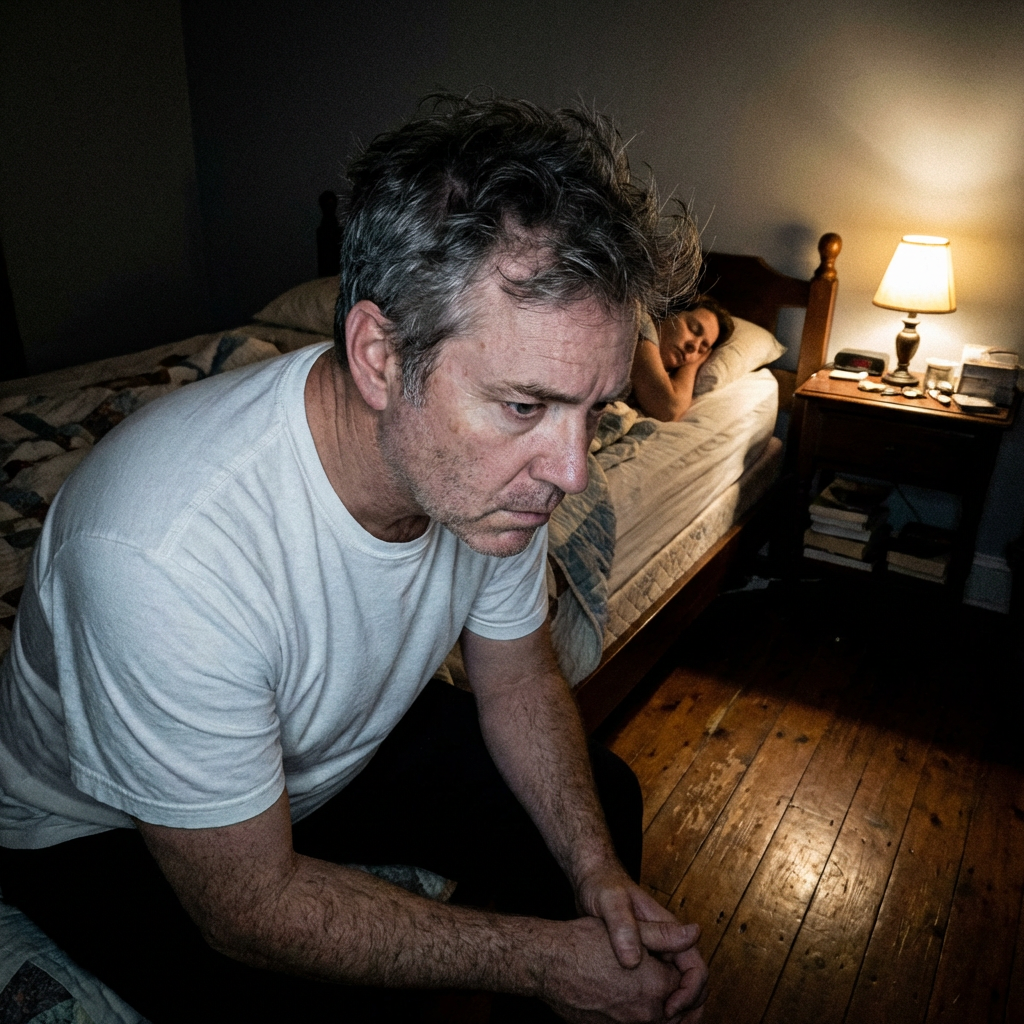
This was our bed every night for three months. Her on the far edge, back turned. Me staring at the ceiling wondering what I'd done wrong. September 2025.
I thought she was falling out of love with me. Turns out, she was holding her breath every time I walked into the room.
It started so gradually I almost missed it.
A slight lean back when I'd go to kiss her goodnight. A half-second pause before getting into bed — like she was bracing herself. Windows cracked in the car even when it was cold out.
Then the bigger things. Date nights that got "rescheduled" three weeks in a row. A sudden interest in sleeping with the ceiling fan on — in November. The way she'd suggest I sit across the table from her instead of next to her at restaurants.
I'm 57 years old. I've been married to Margaret — Maggie — for 31 years. I know when something is wrong. But every time I asked, I got the same answer:
"I'm fine. You're imagining things."
I wasn't imagining things. But the truth was something she loved me too much to say to my face.
Thanksgiving. The Hallway. My Daughter's Tears.

Hannah pulled me away from the party. Twenty-two people in the next room and she needed me to hear something none of them could say.
Our whole family was at the house. Twenty-two people. Turkey in the oven, football on the TV, kids running through the living room. Normal. Happy. The kind of Thanksgiving you take for granted until you can't have them anymore.
My daughter Hannah pulled me into the hallway. Away from everyone. She had that look — the one where she's trying to be brave but her chin is already trembling.
"Dad, I need to tell you something. And I need you to not get mad at Mom."
My stomach dropped.
"What is it?"
She took a breath. Then:
"Dad... you smell. Like, all the time now. Mom didn't want to hurt you. But it's bad. It's really bad."
I stood there. Frozen. The sounds of the party — laughter, clinking glasses, my grandson shrieking about something — suddenly felt a thousand miles away.
Because the moment she said it, everything clicked.
Every window Maggie opened. Every time she turned her face when I leaned in. Every excuse to avoid being close to me in an enclosed space. The ceiling fan in November. The "rescheduled" date nights. The space between us in bed that grew wider every week.
It wasn't that she'd fallen out of love.
It was that she couldn't breathe.
I Scrubbed Until My Skin Was Raw. It Didn't Matter.
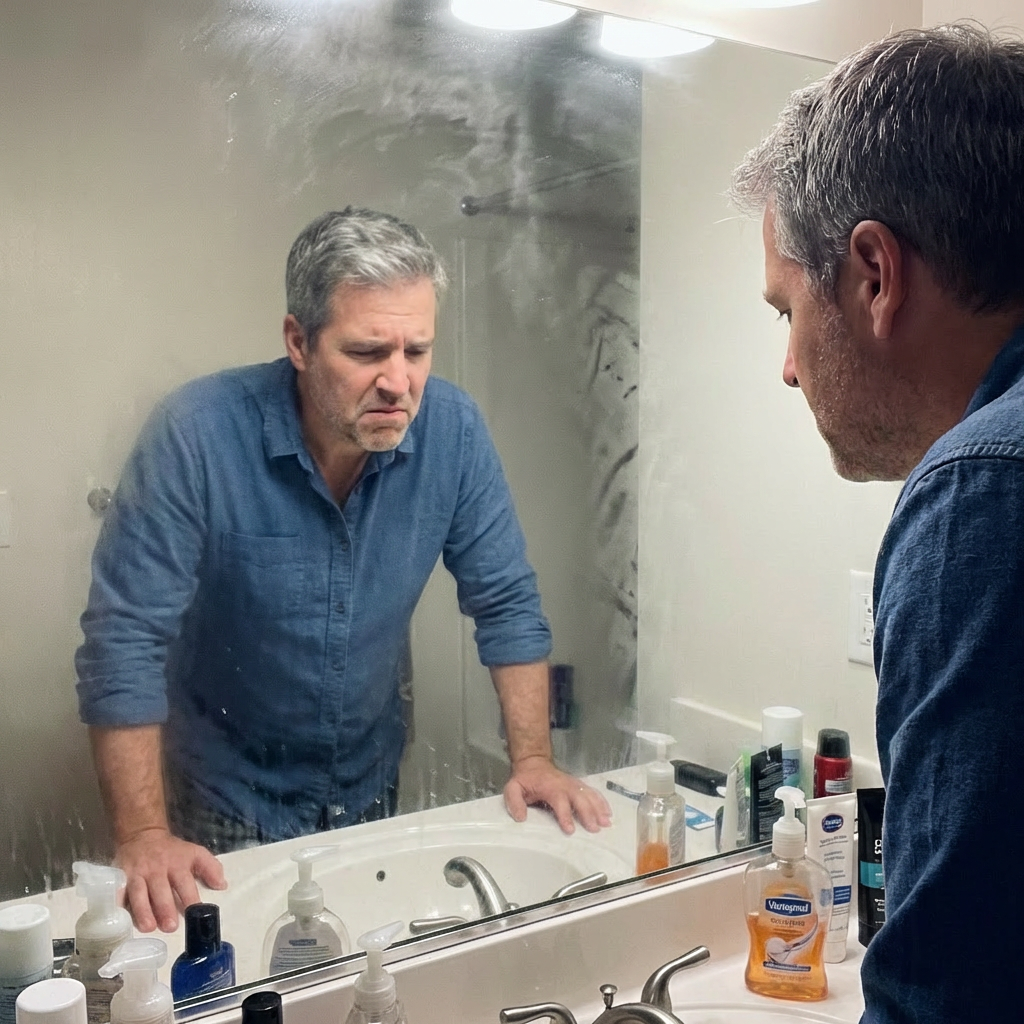
I scrubbed until my skin was red. Fresh soap, fresh cologne, fresh shirt. Thirty minutes later, the smell was already back. Because it wasn't coming from my skin.
I went straight to the bathroom. Locked the door. Stripped down. Turned the shower to the hottest setting I could stand.
I scrubbed with my body wash. Then my son-in-law's body wash. Then hand soap. Then I scrubbed again. I used a washcloth so rough it left red marks on my chest. I brushed my teeth twice. Gargled mouthwash until my gums burned. Put on a completely fresh shirt. Fresh deodorant. The expensive cologne Maggie bought me for Christmas two years ago — the one she used to say made her want to "stay close."
Walked back into the kitchen feeling clean. Fresh. Normal.
Maggie hugged me. And I watched her — really watched her this time.
She turned her face slightly to the side. Held the hug for exactly two seconds instead of her usual five. And when she pulled back, she exhaled through her mouth.
Thirty minutes after the most thorough shower of my life, the smell was already back.
Because the smell wasn't coming from my skin.
It was coming from inside me.
And no amount of soap, cologne, mouthwash, or scrubbing could touch it. Because it was in my blood. In my sweat. In every breath I exhaled. Seeping out of every pore, 24 hours a day, while I had no idea.
My wife had spent three months choreographing her entire life around not breathing the air near me. And she did it because she loved me too much to say the words that would have destroyed me.
Monday Morning. The Numbers That Changed Everything.
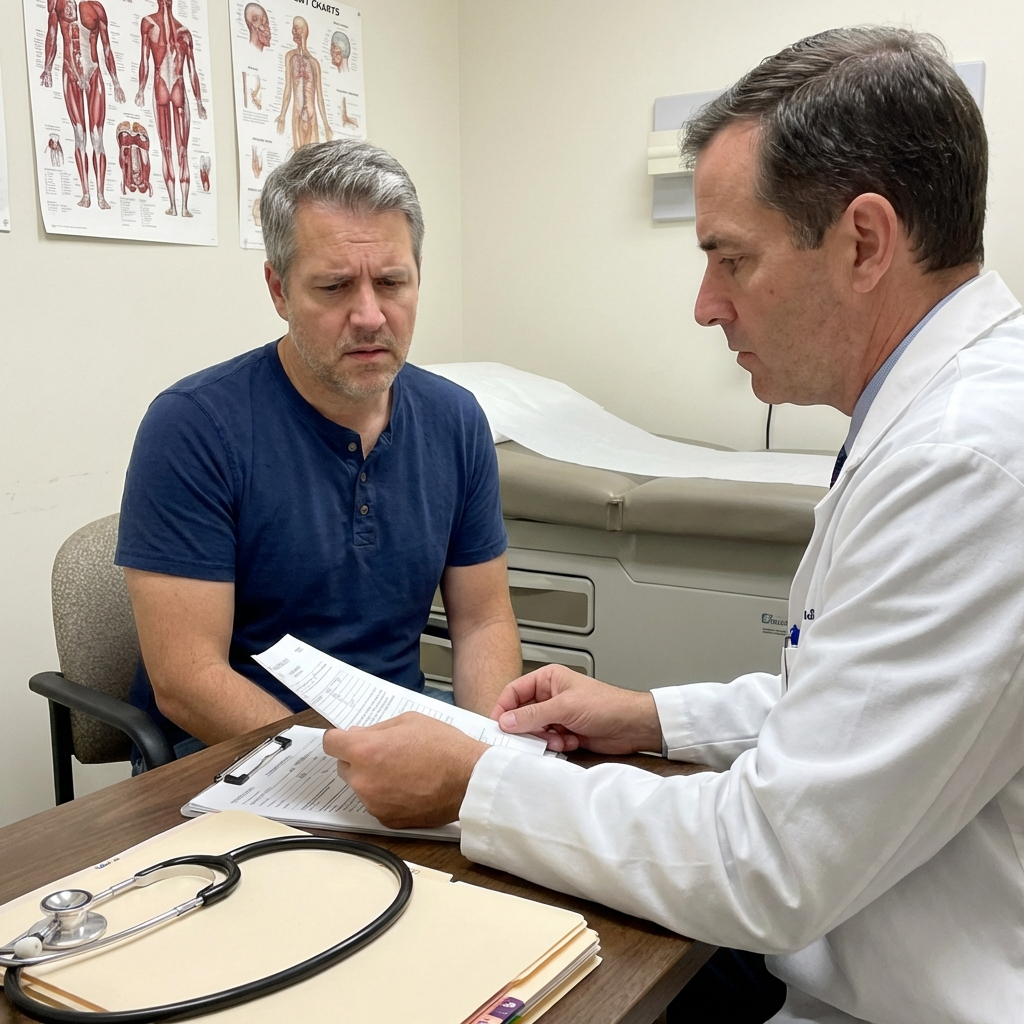
Dr. Reardon didn't send a nurse. He called me personally. 'Fletcher, I need you to come in today.'
I was at my doctor's office first thing Monday. I couldn't say the real reason — I was too ashamed. I told him I'd been feeling sluggish. Tired. Brain fog during client meetings. Waking up at 3 AM every night for no reason.
He ordered comprehensive blood work — including a full hepatic panel. This is something most annual physicals don't include. I'd been getting "clean bills of health" for 25 years while my liver was silently dying, because nobody was testing for it.
Two days later, he called me personally. Not his nurse. Not a message through the portal. Him. On my cell phone.
"Fletcher, I need you to come in today."
My Blood Work — November 28, 2025:
• ALT: 168 (Normal: 7-35) — nearly 5x the upper limit
• AST: 143 (Normal: 8-35) — over 4x the upper limit
• GGT: 219 (Normal: 9-48) — over 4.5x the upper limit
• Bilirubin: 3.4 (Normal: 0.3-1.2) — nearly 3x the upper limit
• Estimated liver function: 39%
Dr. Reardon sat across from me and delivered the words I will never forget:
"Fletcher, your liver is failing. And the smell your family is noticing? That's your body trying to get rid of the toxins your liver can't handle anymore. It's called fetor hepaticus. It's coming through your pores, your breath, your sweat. You can't shower it away because it's not on the surface. It's in your blood."
I couldn't speak.
"How?" I finally managed. "I'm not a heavy drinker. Two glasses of wine with dinner. Maybe three on a weekend. That's it. That's been it for 25 years."
He nodded slowly. "That's exactly the problem."
My liver was operating at barely a third of its capacity. No pain. No jaundice. No warning. Just a smell I couldn't detect myself — and a wife who couldn't tell me the truth.
The Poison Inside You That Your Doctor Never Mentions
What Dr. Reardon explained next made me furious — not at him, but at every doctor I'd ever seen who never thought to check.
Every single glass of wine, beer, or cocktail you drink creates a byproduct in your body called acetaldehyde.
You've probably never heard that word. Most people haven't. But you need to remember it, because it's the reason I almost lost my marriage, and it may be the reason you're experiencing things right now that you can't explain.
Acetaldehyde is 30 times more toxic than alcohol itself.
Your liver's job is to neutralize this poison using two specific enzymes — alcohol dehydrogenase (ADH) and aldehyde dehydrogenase (ALDH). When you're young and your liver is healthy, this system works beautifully. Drink comes in. Acetaldehyde gets created. Liver enzymes break it down into harmless acetate. Gone. No damage.
But here's what nobody tells you:
Every single time this process happens, it causes micro-damage to your liver cells. Invisible. Painless. Undetectable on a standard physical. But cumulative.
After 5 years of moderate drinking, your liver has absorbed thousands of these micro-injuries.
After 10 years, your enzyme production starts declining. You process acetaldehyde slower. It lingers longer in your blood.
After 15 years, you start to feel it — but you blame it on aging. The fatigue. The brain fog. The 3 AM wake-ups. The belly that won't go away no matter what you eat.
After 20+ years, your liver falls behind completely. Acetaldehyde floods your bloodstream faster than your overwhelmed liver can clear it. Your body starts dumping it through every available exit.
Your skin. Your breath. Your sweat.
That's the smell.
That's what my wife was smelling every night for three months.
That's what she couldn't bring herself to tell me.
— International Agency for Research on Cancer (IARC), World Health Organization
It Wasn't Just the Smell. It Was Everything.

3 AM. Every single night. Heart racing, mind spinning, staring at the ceiling. I blamed stress. I blamed my phone. I blamed everything except the organ that was failing inside me.
Once Dr. Reardon explained the mechanism, I started connecting dots I'd been ignoring for years. The smell was the symptom that finally made me act. But it wasn't the only one. It wasn't even close.
The 3 AM wake-ups. Every single night for the past year, I'd snap awake at 3 AM. Heart racing. Mind spinning. Wide awake for an hour, sometimes two, then crashing back to sleep and dragging through the morning. I blamed stress. I blamed my phone. I tried melatonin, chamomile tea, a white noise machine. Nothing worked. Because the cause wasn't stress — it was my liver. Your liver does its heaviest detoxification work between 1-3 AM. When it can't keep up, the toxic buildup triggers a cortisol spike that jolts you awake. The 3 AM wake-up isn't insomnia. It's a distress signal.
The brain fog. I'm a retired operations consultant. My brain was my livelihood. And for the past 18 months, I'd been struggling in meetings. Forgetting client names. Losing my train of thought mid-sentence. Reading the same email three times before understanding it. I told myself I was getting older. Maybe I needed more coffee. Maybe I was burning out. No. Acetaldehyde crosses the blood-brain barrier. When it accumulates, it directly impairs cognitive function — memory, focus, processing speed. The "brain fog" wasn't aging. It was poisoning.
The fatigue. Bone-deep tiredness that no amount of sleep fixed. I'd sleep 8 hours and wake up feeling like I'd slept 3. By 2 PM every day, I'd hit a wall so hard I could barely keep my eyes open. Two coffees, sometimes three, just to make it to 5 PM. I blamed my schedule. I blamed my workload. I didn't blame the organ responsible for producing the energy my cells needed to function — because I didn't know it was failing.
The belly. I'd been carrying 15-20 extra pounds around my midsection for years. Couldn't lose it no matter what. Tried cutting carbs. Tried intermittent fasting. Tried working out harder. The belly stayed. Because when your liver can't produce enough bile to break down dietary fat, that fat doesn't get metabolized — it gets stored. Right around your midsection. The "beer belly" that won't budge isn't about beer. It's about a liver that can't do its job.
The bloating. After every meal, my stomach would inflate like a balloon. Tight. Uncomfortable. Embarrassing. I'd unbutton my pants at my desk after lunch. I stopped tucking in my shirt because the bloating was visible. I thought it was food sensitivity. Lactose, maybe. Gluten. I eliminated half my diet trying to find the trigger. The trigger was my liver — unable to produce enough bile to digest fats properly, leaving food sitting in my gut, fermenting, expanding.
The mood. I'd become irritable. Short-tempered. Snapping at Maggie over nothing. Withdrawing from friends. Canceling plans because I "just didn't feel like it." I thought I was depressed. Maybe I was. But the root cause wasn't psychological — it was biochemical. Acetaldehyde disrupts serotonin and dopamine production. Your mood doesn't stand a chance when your brain is being bathed in a toxin your liver can't clear.
What I now know were ALL symptoms of liver failure — that I blamed on "getting older":
✗ The smell (fetor hepaticus)
✗ 3 AM wake-ups (liver detox overload → cortisol spike)
✗ Brain fog (acetaldehyde crossing blood-brain barrier)
✗ Chronic fatigue (impaired energy metabolism)
✗ Belly fat that won't budge (inadequate bile production)
✗ Bloating after meals (poor fat digestion)
✗ Irritability and mood changes (neurotransmitter disruption)
✗ Slow recovery after drinking (depleted glutathione)
✗ Skin looking dull, older (toxin excretion through skin)
✗ Weakened immune system (frequent colds, slow healing)
Ten symptoms. Ten things I'd been experiencing for years. Ten things I blamed on aging, stress, diet, genetics, bad luck — anything except the organ that was silently dying in the center of my body.
And here's the worst part: 78% of adults over 40 who drink moderately have never had a comprehensive liver panel. Their liver could be operating at half capacity — or less — and they'd never know until a symptom becomes impossible to ignore.
For me, that symptom was my wife moving to the far side of the bed.
For someone else, it might be jaundice. Yellow eyes. Swollen ankles. A collapse. Or worse.
The question is: do you wait for your symptom? Or do you do something now?
Then Maggie Said the Words That Terrified Me More Than My Own Diagnosis
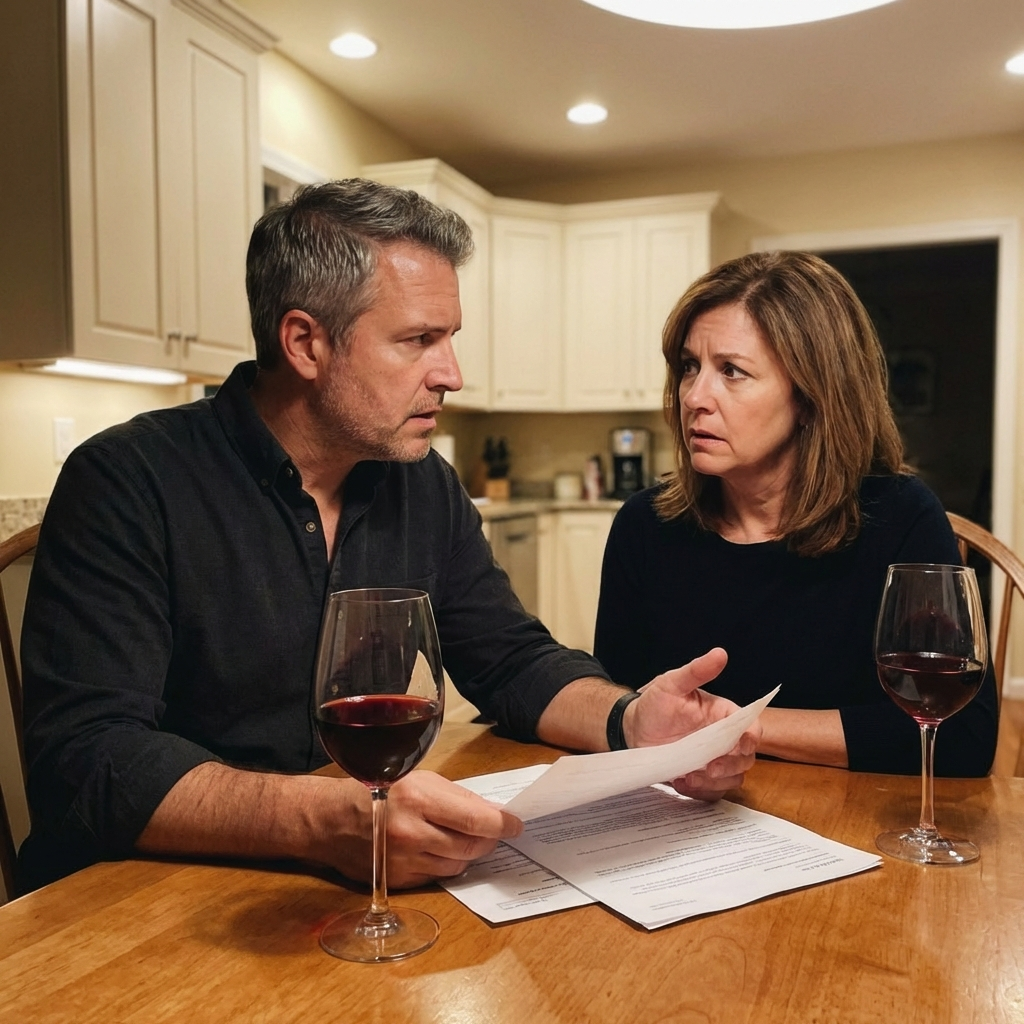
The same kitchen table where we'd shared thousands of dinners with wine. Now I was showing her blood work that explained why her husband smelled like something was dying inside him.
That night, I told Maggie everything. We sat at the kitchen table — the same table where we'd shared thousands of dinners with wine — and I showed her my numbers.
She listened without interrupting. When I finished, she was quiet for a long time.
Then she said: "Fletcher, if this is happening to you... what's happening to me?"
My blood went cold. Because Maggie drinks wine with me. Less — maybe 3-4 glasses a week to my 10-12. But still, regularly, for 25 years.
She got tested two days later.
Her results came back worse than mine.
Maggie's Results:
• ALT: 172 (vs. my 168)
• AST: 148 (vs. my 143)
• GGT: 234 (vs. my 219)
She was drinking 70% less than me but had significantly worse liver damage.
I couldn't process it. How could someone who drinks a fraction of what I do have WORSE numbers?
Dr. Reardon explained:
Women develop alcohol-related liver damage 3 times faster than men. Lower levels of alcohol dehydrogenase, less body water to dilute alcohol, and hormonal changes during perimenopause accelerate liver damage significantly.
Source: Stanford Liver Center, Gender Differences in Alcohol Metabolism, 2024
Maggie's "moderate" three glasses a week had been doing more damage than my twelve.
She cried that night. Not because of the numbers — because of the years she'd already lost without knowing. The fatigue she'd blamed on menopause. The weight around her middle she couldn't lose. The headaches. The skin changes. All of it — her liver, screaming for help in a language she couldn't hear.
"Just Stop Drinking" — The Advice That Nearly Destroyed Our Marriage
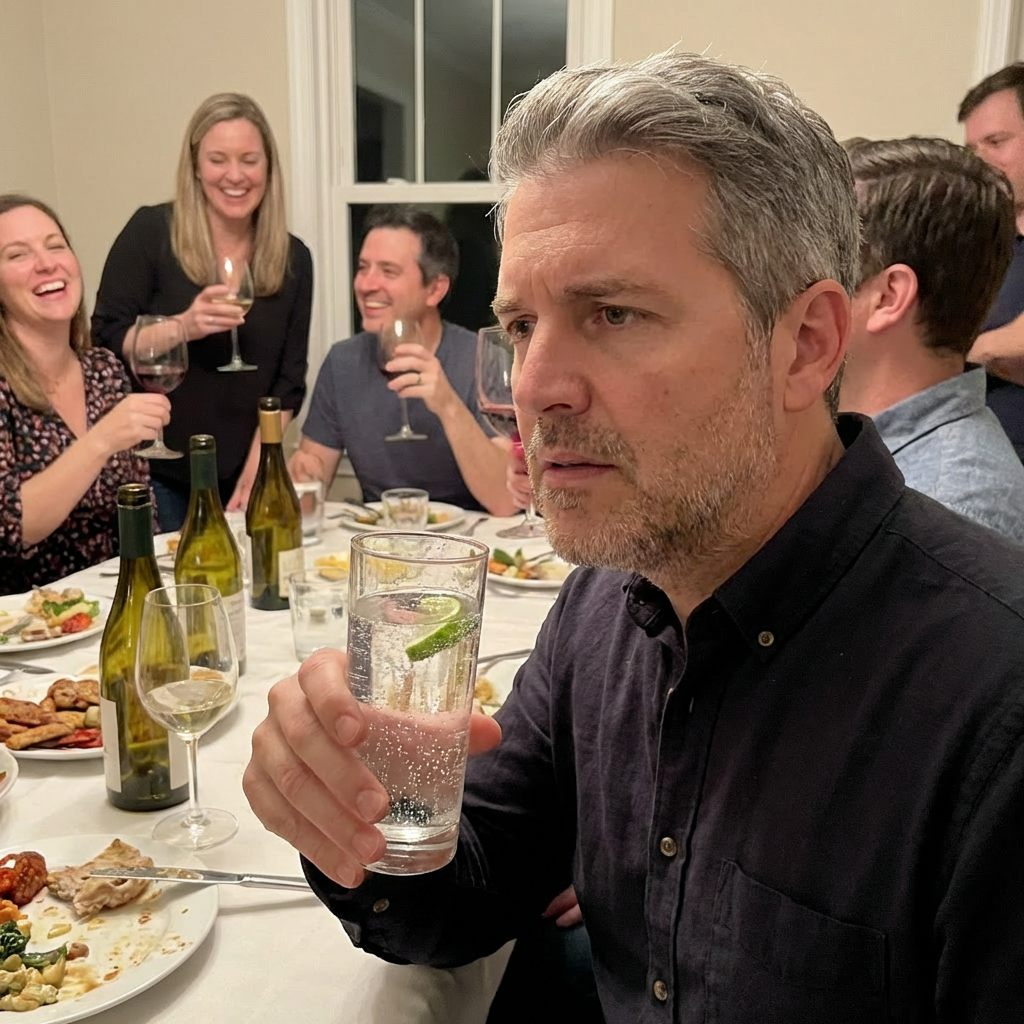
Week four. Dinner party at the Aldridges'. Everyone drinking. Us with sparkling water. Dave pulled me aside: 'Everything okay, Fletcher? You two seem... different.'
Dr. Reardon's recommendation was the same one every doctor gives: complete abstinence. Zero alcohol. Immediately.
So we stopped. Both of us. Cold.
And it nearly broke everything.
I need you to understand something. We are not alcoholics. Neither of us had withdrawal symptoms, cravings, or any hallmarks of dependency. We could go days without thinking about a drink.
What we couldn't do was erase 31 years of shared rituals overnight.
Wine while cooking together on Sundays. Champagne on every birthday, anniversary, and milestone. A glass of something to mark the end of a hard week. The Barolo we'd been saving for our 35th anniversary. The aperitif hour on vacation in Italy. The way a bottle of wine on the table turned a Tuesday dinner into an event.
These weren't "drinks." They were chapters of our life together. And the doctor was telling us to burn the whole book.
Week one was fine. Fear carried us.
Week two was uncomfortable. Friday night felt empty. Saturday dinner felt clinical.
Week three, Maggie broke down in the kitchen. "I found out I'm poisoning myself, and now I can't even have a glass of wine to process what that means. How is this the answer?"
Week four. Dinner party at the Aldridges'. Everyone drinking. Us with sparkling water. Dave Aldridge, who's known me 22 years, pulled me aside: "Everything okay, Fletcher? You two seem... different."
Different. That's one word for it.
Week five. Our first real fight in years. Not about anything. About everything. About the emptiness. About the social isolation. About the pity in people's eyes when you decline a glass — because everyone assumes you're either an alcoholic or terminally ill.
"I don't want to live like this," Maggie said. Not angry. Broken. "I don't want to give up every good thing in our life to fix one bad thing. There has to be another way."
She was right.
Complete abstinence is the medically correct answer. But it's an answer that ignores the fact that we're human beings with a life we've built over three decades. An answer that works on paper but shatters in practice.
I needed something else. Not a replacement for medical advice. Not permission to be reckless. A bridge. A way to protect our livers while we rebuilt our relationship with alcohol in a sustainable, honest way.
I Tried Everything. Liver Cleanses. Detox Teas. Supplements That Did Nothing.
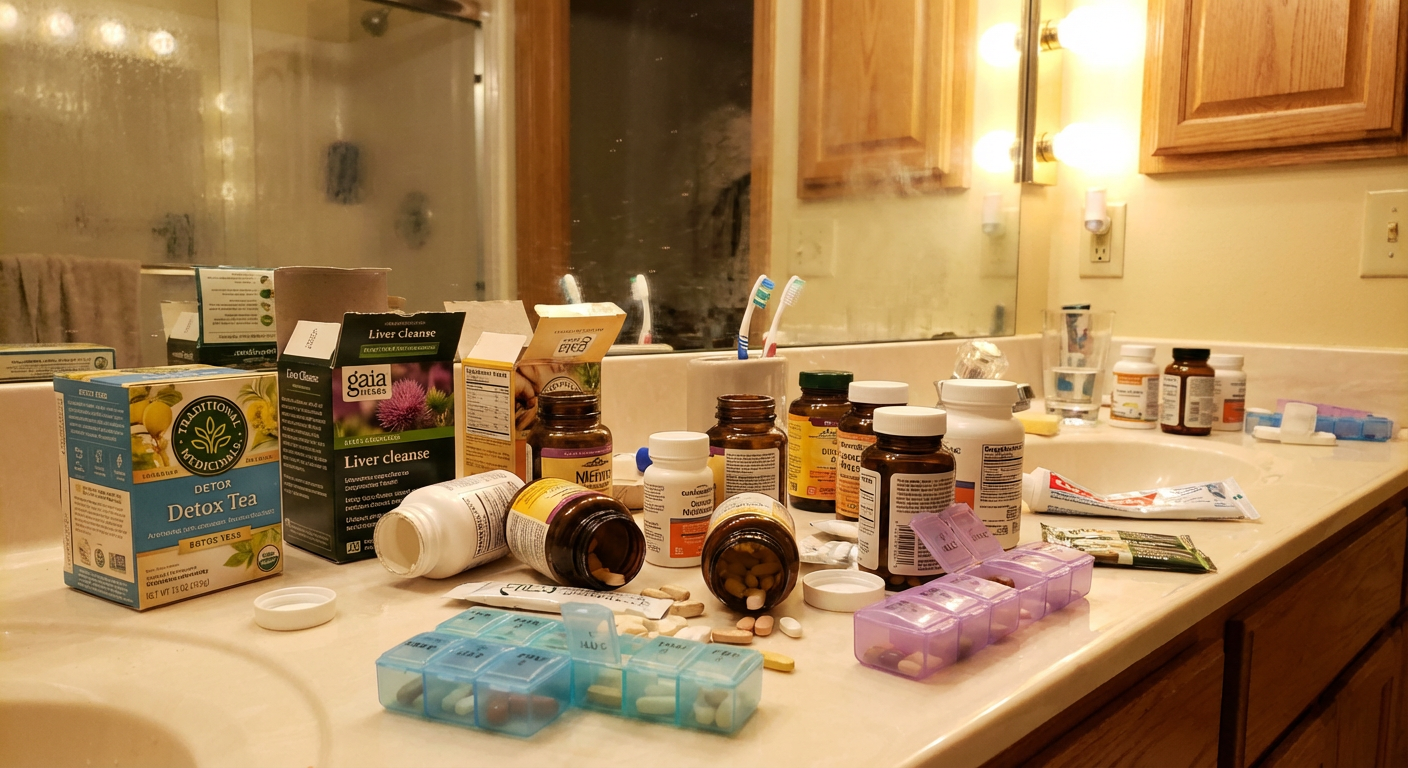
Four different supplements. Detox teas. A $200/session functional medicine practitioner. Two weeks of liver cleanse kits. Total spent: over $600. Total improvement: zero.
I spent the next two weeks trying every "liver health" solution I could find. Here's what happened:
Liver cleanse kits ($40-80). Glorified laxatives. You spend two days in the bathroom and feel "lighter" because you're dehydrated. Your liver enzymes? Unchanged. The "stones" these kits claim to remove from your liver? They're actually saponified olive oil — literally soap balls created by the mixture of olive oil and citrus juice in the kit itself. It's a parlor trick, not medicine.
Detox teas ($25-50). Dandelion root, milk thistle dust, and a lot of marketing. I drank three cups a day for two weeks. The only detox happening was in my wallet.
Generic liver supplements ($15-30). I bought four different bottles from the health food store. Milk thistle alone. Underdosed. Unstandardized — meaning the active compound (silymarin) could be anywhere from 10% to 80% of the extract, and they don't tell you which. One bottle had a "proprietary blend" of 37 ingredients, each one dosed so low it couldn't possibly have a clinical effect. Marketing, not medicine.
Functional medicine practitioner ($200/session). She was kind. Well-intentioned. Ran more tests. Gave me a list of 14 supplements to take daily — totaling $340/month. I did it for a month. My ALT dropped by 8 points. Eight. From 168 to 160. At that rate, it would take me three years to get back to normal range — if I could afford the $4,080 per year in supplements.
"Just drink less." Brilliant advice. I cut from 12 glasses a week to 4. And you know what? My numbers barely moved. Because the damage was already done. Reducing intake helps prevent future damage. But it does nothing to repair 25 years of accumulated injury. And it doesn't give your liver the compounds it needs to process the toxins still circulating in your blood right now.
Nothing I tried addressed the actual problem: my liver's inability to neutralize acetaldehyde efficiently. They were all treating symptoms — or pretending to — while the root cause continued unchecked.
I was running out of options. And every night, I was still sleeping next to a wife who had to turn her face away from me.
Then I Found the Research That Changed Everything
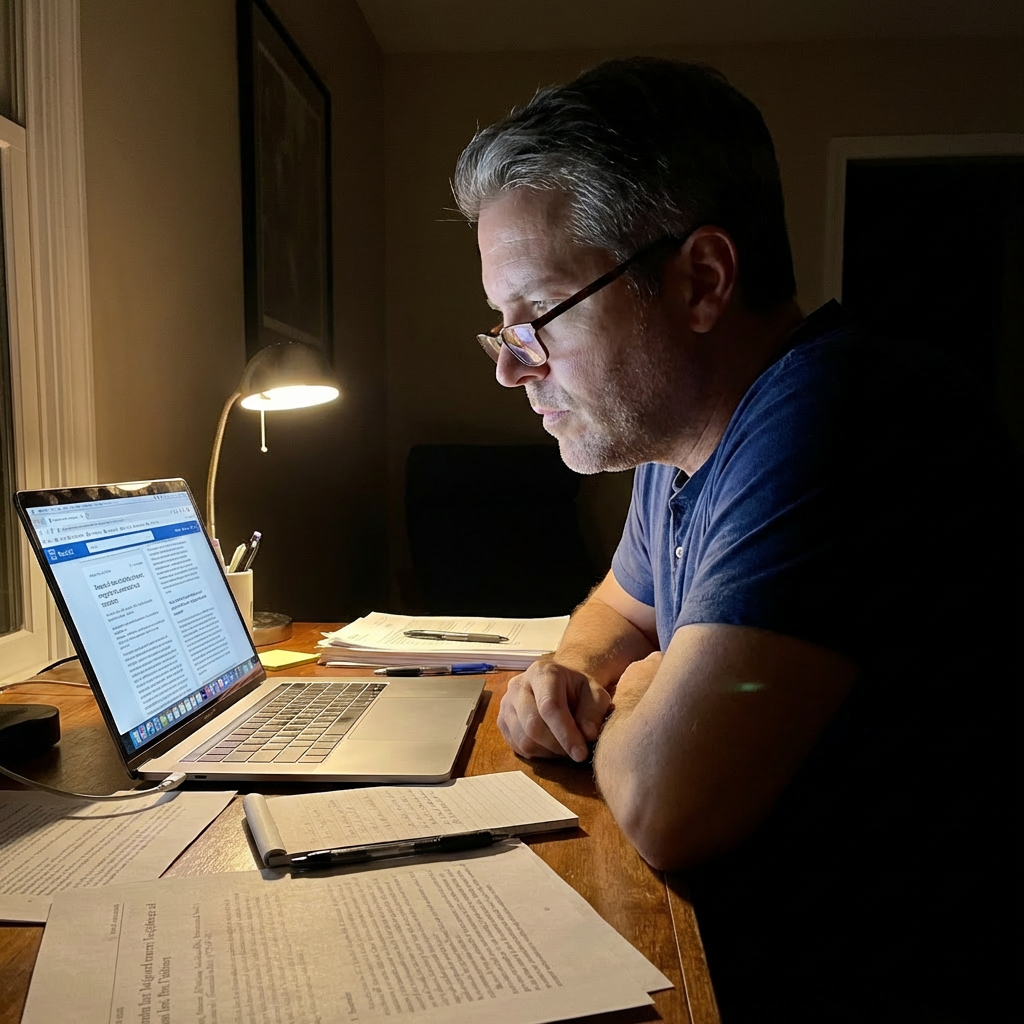
Three nights on PubMed. Not health blogs. Not influencer recommendations. Peer-reviewed research from the same database doctors use. What I found stunned me.
I do what I've done for 30 years when someone tells me there's only one answer. I find the others.
I went deep. Not health blogs. Not influencer recommendations. I went into PubMed — the U.S. National Library of Medicine's database of peer-reviewed research. The same database doctors and researchers use. And I searched for one thing:
Compounds clinically proven to enhance acetaldehyde metabolism in the human liver.
What I found stunned me. Because the science isn't missing. It isn't "preliminary" or "promising." It's definitive, published, and replicated across multiple institutions. The medical establishment just ignores it because the compounds are natural and unpatentable — meaning there's no money in turning them into drugs.
Three compounds came up again and again and again in the research:
🧬 Compound #1: DHM (Dihydromyricetin) — The Acetaldehyde Killer
This is the compound that changed my life. And I don't say that lightly.
DHM is a flavonoid extracted from the Japanese raisin tree — a plant used in East Asian medicine for over 500 years specifically for alcohol-related conditions. Emperors in the Tang Dynasty used it. But it wasn't validated by Western science until 2012.
That's when researchers at UCLA published a landmark study in the Journal of Neuroscience showing that DHM enhances the activity of both ADH and ALDH enzymes by up to 57%.
Read that again. The two exact enzymes your liver uses to break down acetaldehyde — the poison causing the smell, the fog, the fatigue, the damage — DHM makes them work up to 57% more efficiently.
A second study at the University of Southern California found that DHM reduced alcohol-induced liver inflammation markers by 44% in just two weeks. The researchers used the word "remarkable" — because nothing else they'd tested came close.
A third study in the Journal of Hepatology showed that DHM actively protects liver cells from acetaldehyde-induced death. It doesn't just help your liver work faster — it shields the cells while they work, preventing the micro-damage that has been accumulating for decades.
This one compound addresses the exact mechanism destroying moderate drinkers' livers. And virtually nobody in Western medicine talks about it.
Sources: Journal of Neuroscience (UCLA, 2012), USC Liver Research Center (2019), Journal of Hepatology (2021)
🛡️ Compound #2: NAC (N-Acetyl-L-Cysteine) — The Glutathione Rebuilder
If DHM is the soldier that fights the poison, NAC is the ammunition supply that keeps the fight going.
Your liver's most powerful internal defense is an antioxidant called glutathione. It intercepts toxins, neutralizes free radicals, and protects liver cells from damage. It's your liver's personal bodyguard.
Here's the problem: every single drink you consume burns through your glutathione reserves. A healthy liver can replenish glutathione naturally. But a liver operating at 39% capacity? It can't produce enough to keep up. Your liver is fighting a war with an empty magazine.
NAC — N-Acetyl-L-Cysteine — is a direct precursor to glutathione. It gives your liver the raw material to rebuild its defenses. And the evidence isn't theoretical:
NAC is used in every emergency room in America. When someone overdoses on acetaminophen — which, like alcohol, destroys the liver — doctors don't reach for a pharmaceutical. They give NAC. Intravenously. Because it's the fastest, most effective way to rescue a failing liver.
A study at Vanderbilt University found that oral NAC supplementation increased glutathione levels by 30-35% within 4 weeks. Another study in the World Journal of Gastroenterology showed that NAC supplementation reduced ALT levels by an average of 35% in patients with fatty liver disease.
The same compound hospitals use to save lives in emergencies is available in supplement form. And almost nobody is taking it.
Sources: Vanderbilt University Medical Center (2018), World Journal of Gastroenterology (2020), American Association of Poison Control Centers
🌿 Compound #3: Milk Thistle (80% Silymarin) — The Liver Regenerator
DHM fights the poison. NAC rebuilds the defenses. But what about the liver cells that have already been damaged? The ones that have been absorbing hits for 25 years?
Your liver is the only organ in the human body that can completely regenerate itself. But it needs help — especially after decades of accumulated damage.
That's where milk thistle comes in. This isn't a trendy supplement — it's the most extensively studied liver herb in human history, with over 400 published peer-reviewed studies.
The active compound is silymarin. Here's what the research shows:
It stabilizes liver cell membranes — physically strengthening the outer wall of liver cells, making them more resistant to toxin damage. Think of it as reinforcing the walls of a building that's been through 25 years of earthquakes.
It stimulates liver regeneration. A clinical trial in Phytomedicine showed that patients taking standardized silymarin had measurably improved liver function within 8 weeks — with visible reduction in fat deposits on imaging.
It neutralizes the free radicals your liver creates while working. The process of detoxification itself generates massive free radical damage. Your liver hurts itself while trying to help you. Silymarin breaks this cycle.
In Germany, milk thistle isn't a supplement — it's a first-line medical treatment for liver conditions. German physicians prescribe it the way American doctors prescribe statins.
Sources: University of Freiburg (2016), Phytomedicine Journal (2019), German Commission E Monographs
Three compounds. Three distinct mechanisms. Working on three different fronts of the same war:
DHM accelerates the breakdown of acetaldehyde — stopping the poison at the source.
NAC rebuilds glutathione — restoring your liver's ability to defend itself.
Milk Thistle protects and regenerates liver cells — repairing decades of accumulated damage.
The research was there. Clear. Published. Replicated. The question was: did anything combine all three in clinically meaningful doses?
I Searched for Three Days. Nearly Gave Up.
I spent 72 hours evaluating every liver supplement on the market. Amazon. Health food stores. Direct-to-consumer brands. Functional medicine formulations.
The pattern was depressing:
Most contained milk thistle alone. No DHM. No NAC. Underdosed. Unstandardized. "Liver cleanse" marketing with the science of a horoscope.
Some had proprietary blends — 30+ ingredients, each dosed so low it's nutritionally meaningless. Hoping a long ingredient list would substitute for actual efficacy.
A few had NAC. Fewer had DHM. I found exactly zero that combined all three at clinical doses with transparent labeling.
I was about to buy each compound separately and build my own stack — three separate bottles, three separate doses, doing my own math on milligrams and hoping I got the ratios right.
Then I found it.
Cloud9 Daily Restore
What caught my attention wasn't the marketing. It was the label.
Because right there, in plain text — no proprietary blends, no hidden formulations — were the exact three compounds I'd spent a week researching. At the exact doses shown to work in clinical studies.
Plus two things I hadn't even thought to look for — but immediately recognized as critical once I saw them.

Cloud9 Daily Restore
The only formula I found that combines all five clinically studied compounds at effective doses — with full label transparency.
What's Inside — Every Milligram Disclosed:
- DHM (Dihydromyricetin) — 300mg: The acetaldehyde neutralizer. Boosts ADH/ALDH enzyme activity by up to 57%. The compound that stops the poison at the source.
- NAC (N-Acetyl-L-Cysteine) — 600mg: The glutathione rebuilder. Same compound used in every ER in America for liver emergencies. Rebuilds the antioxidant your liver has been burning through with every glass of wine for 25 years.
- Milk Thistle Extract (80% Silymarin) — 250mg: The liver regenerator. Standardized to 80% silymarin — the exact concentration used in clinical studies. Protects liver cells and stimulates regeneration of damaged tissue.
- Thiamine (Vitamin B1) — 100mg: The brain protector. Alcohol depletes B1 faster than any other vitamin. B1 deficiency is the primary driver of alcohol-related cognitive decline — the brain fog, the memory lapses, the word-finding difficulty. This dose prevents the silent neurological damage most moderate drinkers don't know is happening.
- Full B-Complex (B2, B6, B9, B12): The energy restorers. Alcohol strips B vitamins from your system systematically. This complete complex replaces what's been stolen with every glass — restoring cellular energy production, mood stability, and metabolic function.
Five compounds. No filler. No proprietary blends. No fairy-dusted ingredients at meaningless doses.
This wasn't a "liver cleanse." It wasn't a detox tea. It wasn't a 37-ingredient marketing gimmick.
It was the science I'd spent a week studying, put into a single capsule, at doses that actually work.
I ordered three bottles that night.
What Happened Next — Week by Week
I took one capsule every morning with breakfast. Here's what happened. I'm going to be specific, because vague claims are what supplement companies use when their products don't work. This one does. And I can prove it.
I Slept Through the Night
For the first time in over a year, I didn't wake up at 3 AM. I slept from 10:30 PM to 6:15 AM. Continuous. Deep. No cortisol spike, no racing heart, no staring at the ceiling. When the alarm went off, I felt... rested. Actually rested. I'd forgotten what that felt like.
The Brain Fog Started Lifting
Client meeting. Normally I'd be grasping for details, checking my notes every few minutes. This time, the numbers were just... there. In my head. Ready. Like someone had wiped a smudged window clean. Not dramatic. Subtle. But unmistakable if you'd been living in the fog for months.
Maggie Didn't Open the Car Window
We were driving to her sister's house. Fifteen-minute ride. I was talking about work — and halfway through, I realized the window was closed. Both windows. Heater on. And Maggie was looking at me while I talked. Not turned away. Not breathing through her mouth. Looking at me. Neither of us said anything. But we both knew.
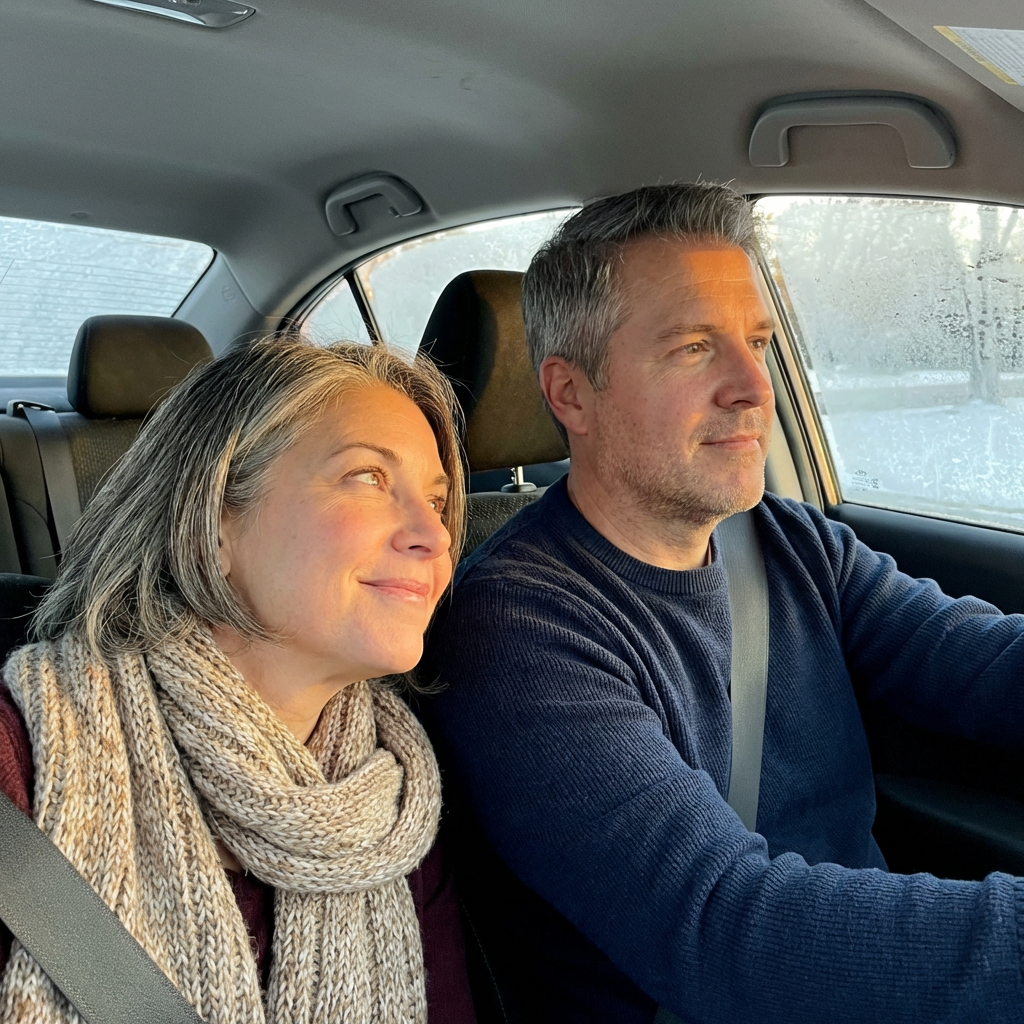
Day 12. Both windows closed. Heater on. And Maggie was looking at me while I talked. Not turned away. Not breathing through her mouth. Looking at me.
She Kissed Me Goodnight
Full kiss. Not the cheek-turn. Not the half-lean. She put her hand on my face and kissed me the way she used to. Then she pulled back and said two words: "There you are." I went into the bathroom after she fell asleep and cried. Standing at the sink, looking at myself in the mirror. Because for three months I thought my marriage was ending. I was 14 days away from fixing it the entire time.
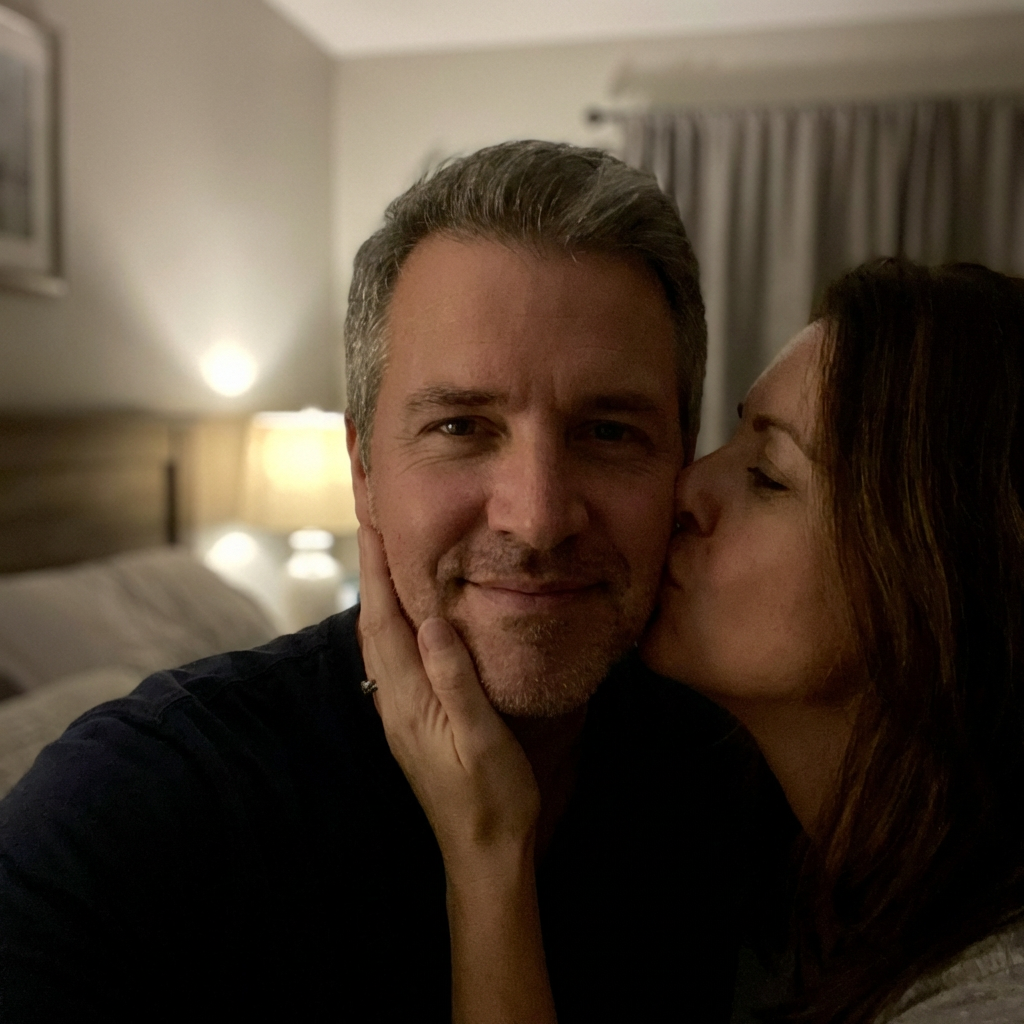
Day 14. She put her hand on my face and kissed me the way she used to. 'There you are,' she whispered. I was 14 days away from fixing it the entire time.
3 AM Wake-Ups Completely Gone
Every single night — full sleep. The cortisol spikes stopped entirely. I started dreaming again. Real dreams. Vivid ones. I'd forgotten that happened when you actually reached deep sleep.
Energy Returned — Like Actually Returned
The 2 PM crash disappeared. I stopped needing a second coffee. Then a third. Then I realized I was making it to 5 PM on one cup — something I hadn't done in years. Saturday mornings, I was up before Maggie, making breakfast, going for a run. She looked at me one morning and said: "You look ten years younger." I felt it.
The Bloating Vanished. Belt Notch Down.
The persistent belly bloat I'd carried for years — gone. My pants fit differently. I dropped a belt notch without changing my diet. The "beer belly" that no amount of exercise could touch was responding to something exercise never could: restored bile production from a liver that was finally working again.
Mood Stabilized. Irritability Gone.
Maggie noticed before I did. "You're not snapping anymore," she said. She was right. The short temper, the withdrawal, the low-grade anger I'd been carrying — it lifted. Not overnight, but gradually, like a fog burning off. My neurotransmitters were functioning again because my brain wasn't being bathed in acetaldehyde anymore.
Blood Work: The Numbers That Made My Doctor Go Silent
I went back to Dr. Reardon for follow-up labs. Same comprehensive panel. Same lab. When the results came in, he called me. And for a long moment, he didn't say anything.
November 28, 2025
ALT: 168 (Normal: 7-35)
AST: 143 (Normal: 8-35)
GGT: 219 (Normal: 9-48)
Bilirubin: 3.4 (Normal: 0.3-1.2)
Liver Function: ~39%
February 26, 2026 (90 Days)
ALT: 42 ↓ 75%
AST: 38 ↓ 73%
GGT: 61 ↓ 72%
Bilirubin: 1.4 ↓ 59%
Liver Function: ~71%
"Fletcher..." Dr. Reardon started. Paused. "What have you been doing?"
I told him. The DHM. The NAC. The milk thistle. The B-vitamins. Cloud9 Daily Restore, one capsule every morning. Plus cutting my wine from 12 glasses a week to 3-4.
He pulled up the research right there in his office. Read the DHM enzyme study. The NAC glutathione data. The silymarin regeneration trials.
Then he said something I never expected a doctor to say:
Christmas Morning. My Daughter. The Words I Needed to Hear.
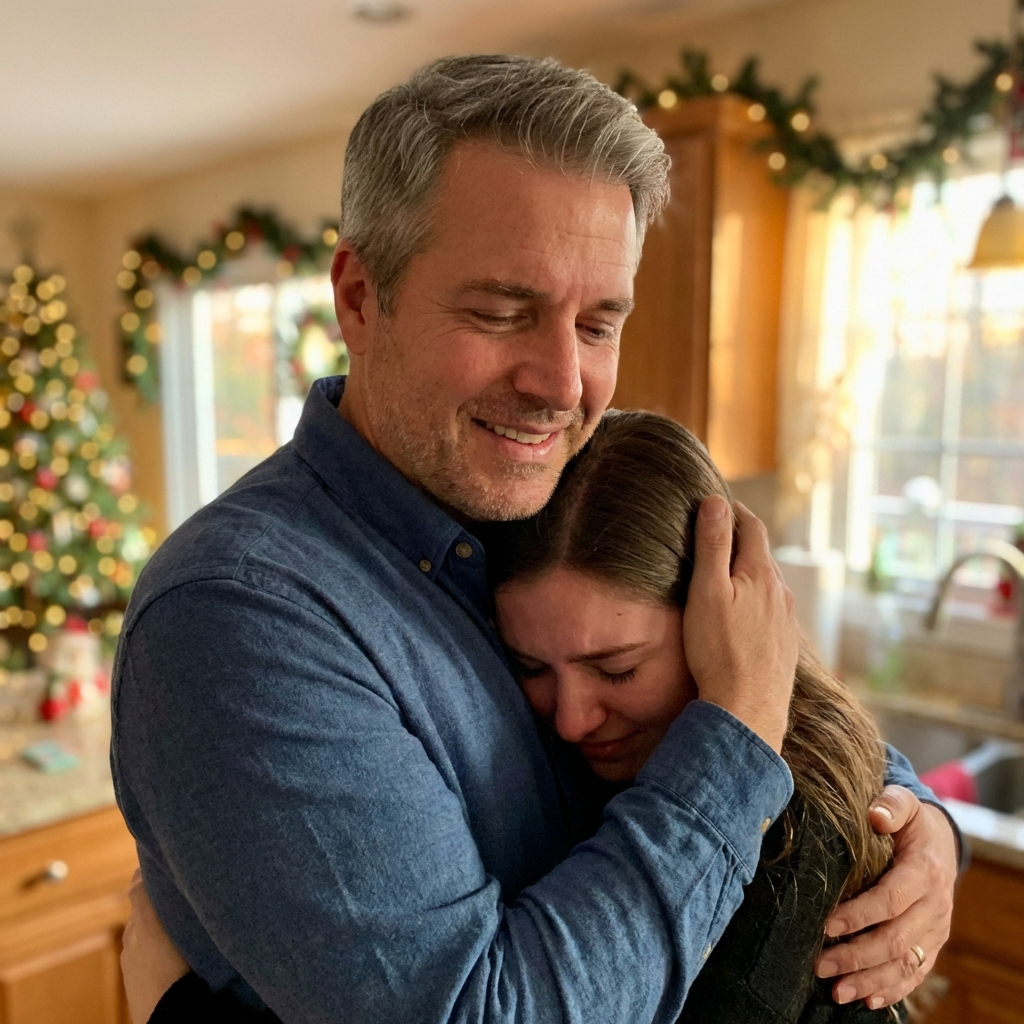
Hannah buried her face in my chest and held on. 'You smell like Dad again,' she whispered. Five words. And every ounce of shame from the past three months — gone.
Maggie's whole family at our house again. Same kitchen. Same chaos. Same daughter who'd pulled me into a hallway five weeks earlier and said the words that sent my world spinning.
Hannah walked up to me while I was carving the turkey. She hugged me. Not the polite kind. The kind where she buried her face in my chest and held on.
"You smell like Dad again," she whispered.
Five words. And every ounce of shame, fear, and humiliation from the past three months — gone.
I looked across the kitchen at Maggie. She was watching us. She had tears in her eyes. And she mouthed two words:
"Thank you."
Maggie's Transformation
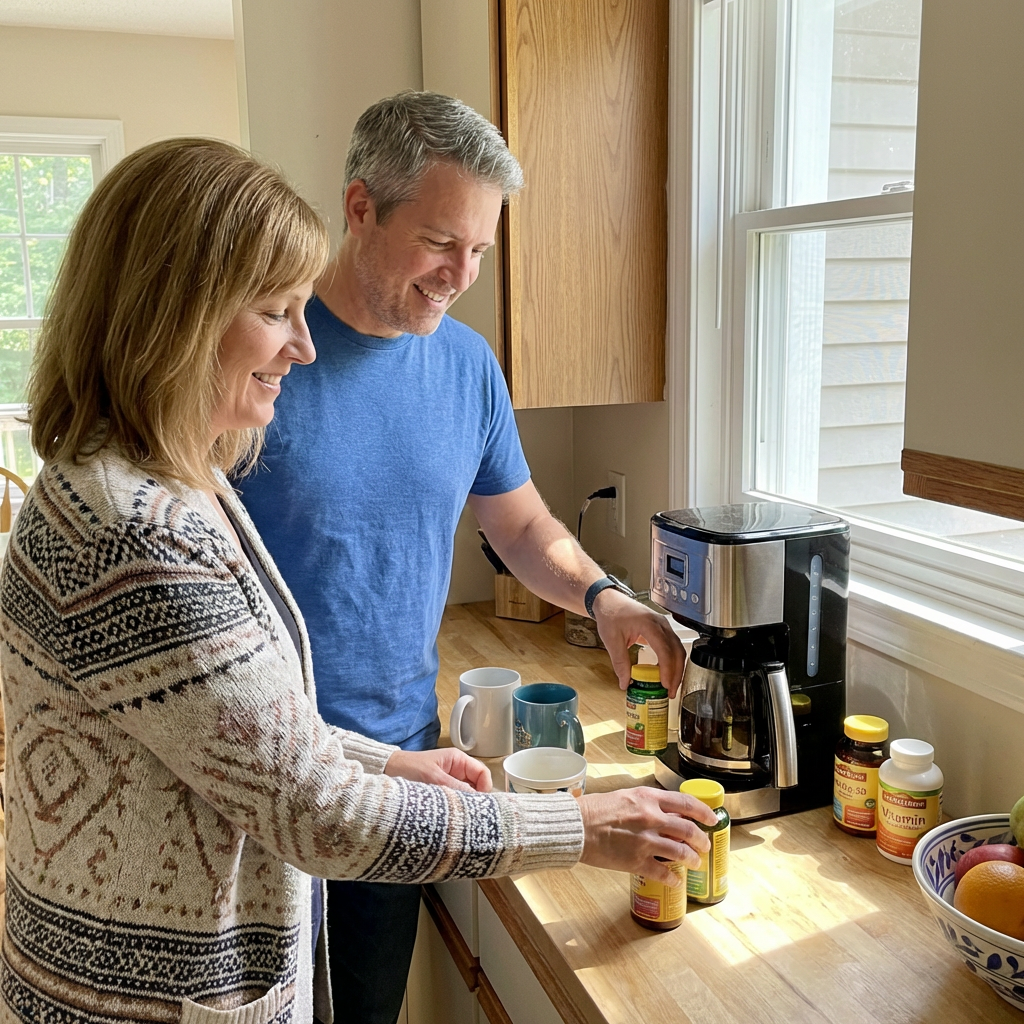
Two bottles on our kitchen counter. Right next to the coffee maker. First thing we reach for every morning. Before coffee. Before anything. Our non-negotiable.
Two weeks after I started, Maggie asked if she could take it too. She started the same routine: one capsule, every morning, breakfast.
At her 60-day follow-up: ALT from 172 down to 31. GGT from 234 down to 44. Both in normal range. Her doctor — different from mine — independently described her improvement as "impressive."
The fatigue she'd blamed on menopause? Gone. The stubborn weight around her middle? Dropping steadily. The headaches? Disappeared by week three. Her skin — she says this, not me — "looks like it did five years ago."
We now keep two bottles on our kitchen counter. Right next to the coffee maker. First thing we reach for every morning. Before coffee. Before anything.
Our non-negotiable.
We're Not the Only Ones
Since sharing my story, I've heard from hundreds of people in the same situation. People whose spouses noticed something they couldn't. People who blamed aging for symptoms that had a solvable cause. People who were 90 days away from getting their life back and didn't know it.
Let's Talk About What This Actually Costs (vs. What You're Already Paying)
Before I show you the options, I want you to think about something.
The average American with liver disease spends $32,000-$58,000 per year on treatment once they're diagnosed. That includes hepatologist visits, imaging, medications, and monitoring.
A liver transplant — which is where untreated liver damage eventually leads — costs over $800,000. And there are currently 11,000+ people on the transplant wait list with only 9,000 transplants performed annually. The math doesn't work in your favor.
Even right now, before a diagnosis, think about what your failing liver is already costing you:
The Hidden Cost of an Overworked Liver:
• The fatigue that kills your productivity (how much is that worth per year?)
• The brain fog that makes you look incompetent in meetings
• The relationship strain when your spouse can't be close to you
• The social isolation when you stop drinking and lose half your social life
• The $15-25/day in coffee, energy drinks, and stimulants just to function
• The gym memberships, diets, and trainers that can't fix a belly caused by bile deficiency
• The creeping medical bills as symptoms multiply
Conservative estimate: $5,000-10,000/year in hidden costs you're already paying.
Cloud9 Daily Restore costs less than $2 a day.
That's less than the second coffee you need because your liver can't produce enough energy.
Which Option Is Right for You
Before I show you the options, let me explain something important — because this is the part where most supplement companies lose my trust, and I want to be different.
Your liver didn't get damaged overnight. Mine took 25 years. The repair process has phases, and each phase takes time:
The Three Phases of Liver Recovery:
Phase 1 — Detoxification (Weeks 1-4): DHM begins accelerating acetaldehyde breakdown. NAC starts rebuilding glutathione reserves. You'll notice improved sleep, reduced brain fog, and — if applicable — the smell begins to fade. Your liver is clearing the toxic backlog.
Phase 2 — Restoration (Months 2-3): Milk thistle's silymarin is actively repairing and regenerating liver cells. Bile production increases — belly bloat decreases, fat digestion improves, energy normalizes. Blood work markers begin dropping significantly. This is where my numbers went from crisis to near-normal.
Phase 3 — Protection (Months 4-6): Your liver reaches a new baseline. Regenerated cells stabilize. Glutathione reserves normalize. The protective mechanisms that prevent future damage lock in. This is the phase that determines whether your improvement is temporary or permanent. Stopping before this phase means your liver hasn't fully rebuilt its defenses — and the damage can return.
That's why I'm being direct: the 6-bottle option exists for a reason. It's not a sales tactic. It's the amount of time the science says your liver needs to complete all three phases of recovery — from detoxification through restoration to permanent protection.
Can you see results with less? Absolutely. I felt improvements by Day 8 and my blood work improved dramatically at 90 days (3 bottles). But I'm continuing through 6 months because I want Phase 3. I want the permanent protection. I want to know my liver has fully rebuilt its defenses and the damage isn't coming back.
Choose the option that matches where you are:
Covers Phase 1 (Detoxification). You'll experience improved sleep, early brain fog relief, and the beginning of toxic backlog clearance. A good starting point if you want to test how your body responds before committing.
→ Start With 1 BottleCovers Phase 1 + Phase 2 (Detoxification + Restoration). This is the duration that produced my blood work transformation — ALT down 75%, liver function nearly doubled. You'll complete the critical repair phase and see measurable results on your next blood panel. Free shipping included.
→ Get 3 Bottles (Most Measurable Results)Covers all three phases: Detoxification + Restoration + Protection. This is the complete liver recovery protocol — the same duration Maggie and I committed to. It ensures your liver fully regenerates, glutathione reserves normalize, and the protective mechanisms that prevent future damage lock in permanently. Free shipping included. Lowest price per bottle.
This is the option I personally use — because Phase 3 (permanent protection) is what separates temporary improvement from lasting recovery. Once your liver completes all three phases, the improvement holds even if you continue moderate drinking.
→ Get 6 Bottles (Complete Protocol — Best Value)What If It Doesn't Work for Me?
Cloud9 Daily Restore comes with a 90-day money-back guarantee.
That means you can take it for three full months — the exact duration that produced my blood work transformation — and if you don't see improvements in how you feel, how you sleep, how you smell, or in your liver panel numbers... you get every penny back. No questions asked. No hassle. Just an email.
I want to be clear about what that means: you have zero risk. Either this works for you the way it worked for me and Maggie and thousands of others — or you pay nothing.
The only risk is doing nothing. And after what I've learned about what "doing nothing" costs — in health, in years, in relationships — that's a risk I'll never take again.
Two Paths. One Decision.
You're sitting where I was sitting four months ago. You may not have the smell — yet. But if you're over 40 and you've been drinking moderately for years, I can almost guarantee you have some combination of what I had: the fatigue, the fog, the 3 AM wake-ups, the belly, the bloating, the mood changes, the slow recovery.
These aren't signs of aging. They're signs of a liver that's losing a war it's been fighting silently for decades.
Path 1: Close this page. Hope your liver is handling it better than mine did. Wait for a symptom you can't ignore — the smell, the jaundice, the collapse — to force you to act. Deal with the numbers when you finally ask for a liver panel, years from now, after the damage has deepened.
Path 2: Give your liver what it needs. One capsule a day. See how you feel in two weeks. Get your blood work at 90 days. Let the numbers show you what your body already knows.
I spent three months wondering why my wife wouldn't kiss me. Three months watching the person I love most rearrange her life to avoid breathing near me. Three months convinced my marriage was dying.
I was 14 days away from solving it the entire time.
Don't wait for your daughter to tell you what your wife can't.
Cloud9 Daily Restore
DHM · NAC · Milk Thistle · B-Complex
Clinically studied ingredients. Clinical doses. Full label transparency.
One capsule daily. 90-day money-back guarantee.
Questions I Get Asked Most
How quickly will I notice something?
Most people notice improved sleep within the first week (fewer 3 AM wake-ups). Brain fog starts lifting around Day 10-14. If body odor from liver distress is present, it typically fades within 2-3 weeks. Blood work improvements are measurable at 60-90 days. My timeline: smell gone by Day 14, full sleep by Day 8, blood work transformed at Day 90.
Do I have to stop drinking?
No. Cloud9 Daily Restore is designed for people who drink moderately and want to protect their liver. It works by helping your liver process acetaldehyde more efficiently while rebuilding its defenses and regenerating damaged cells. That said, reducing your intake will amplify results. I went from 10-12 glasses/week to 3-4, and the combination produced dramatic improvements.
Is this safe? Can I take it with my medications?
The ingredients have extensive safety profiles. NAC is used in hospitals. Milk thistle has 400+ published studies. DHM has centuries of traditional use and modern validation. That said, consult your doctor before starting — especially if you're on blood thinners, liver medications, or immunosuppressants.
Why not just buy DHM, NAC, and milk thistle separately?
You could. But you'd need to source three separate products, verify the standardization of each (especially milk thistle — anything below 80% silymarin is likely underdosed), calculate your own dosing, and take 6-8 capsules a day instead of one. I considered doing exactly this. Cloud9 saves the guesswork, combines the right doses, and adds the B-complex that most people wouldn't think to include. It costs about the same as buying separately but in one capsule.
How long should I take it?
Minimum 90 days for measurable blood work improvement. Six months for full three-phase recovery (detoxification → restoration → protection). After that, Maggie and I continue taking it daily as ongoing liver support — the same way we'd take any essential supplement. Given that we still enjoy wine several times a week, ongoing protection isn't optional for us. It's maintenance.
What if it doesn't work?
90-day money-back guarantee. Full refund. No questions asked. You have three months to decide, risk-free.
One Last Thing
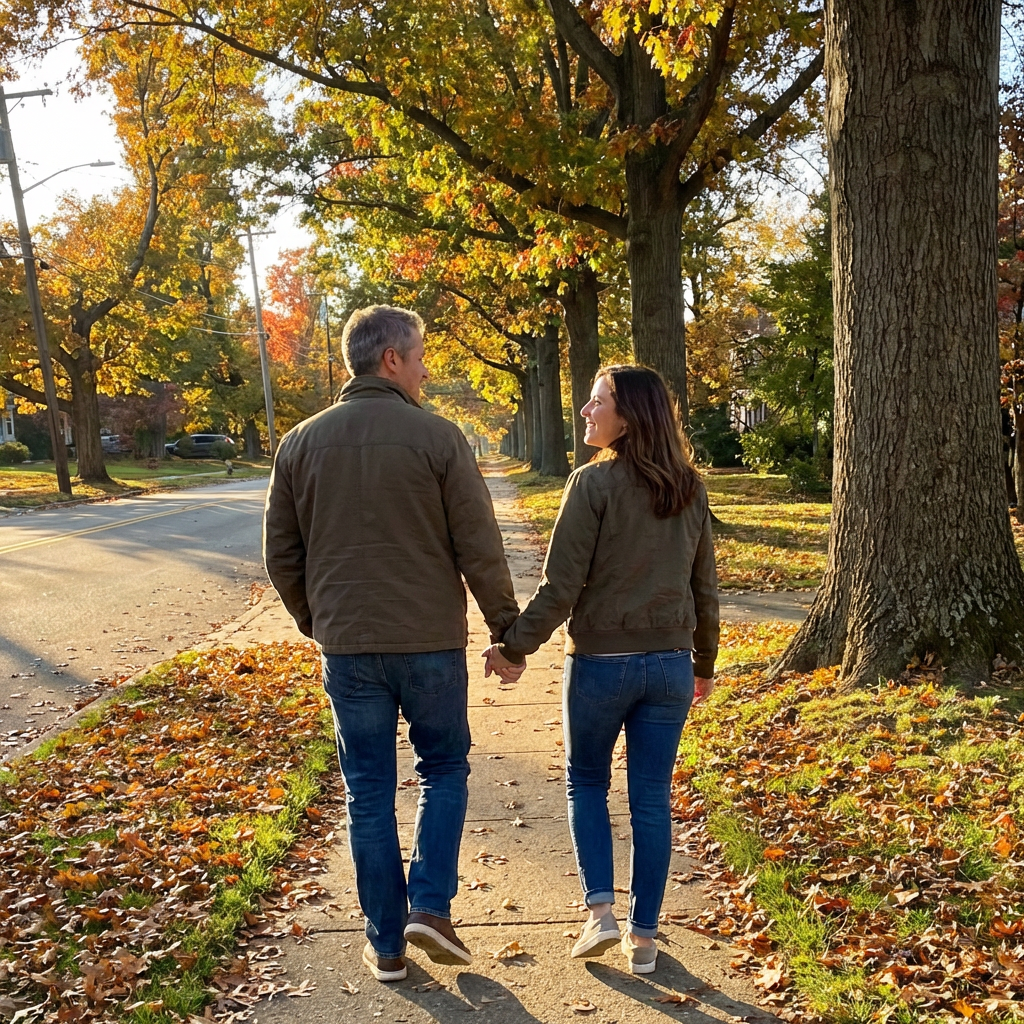
February 2026. Maggie and I walk every evening now. Windows down. Holding hands. No more distance. No more choreographing her life around not breathing near me.
I debated writing this. Publicly admitting that your body emitted an odor so offensive that the person you love most couldn't kiss you — that's not something a 57-year-old retired operations consultant wants attached to his name.
But I keep thinking about September-me. The version who thought his marriage was ending. Who couldn't figure out why his wife was pulling away. Who had no idea the answer was seeping out of his pores.
If this reaches one person who's where I was — confused, scared, noticing things they can't explain — and saves them even one month of unnecessary suffering, then the embarrassment is worth it.
Your liver is talking to you right now. Through the fatigue. Through the brain fog. Through the 3 AM wake-ups. Through the belly. Maybe through the smell.
I couldn't hear mine until my daughter said the words my wife couldn't.
You don't have to wait that long.
→ Get Cloud9 Daily Restore — 90-Day Risk-Free Guarantee— Fletcher Haines, February 2026