The Night I Collapsed at a Client Dinner After Two Glasses of Wine
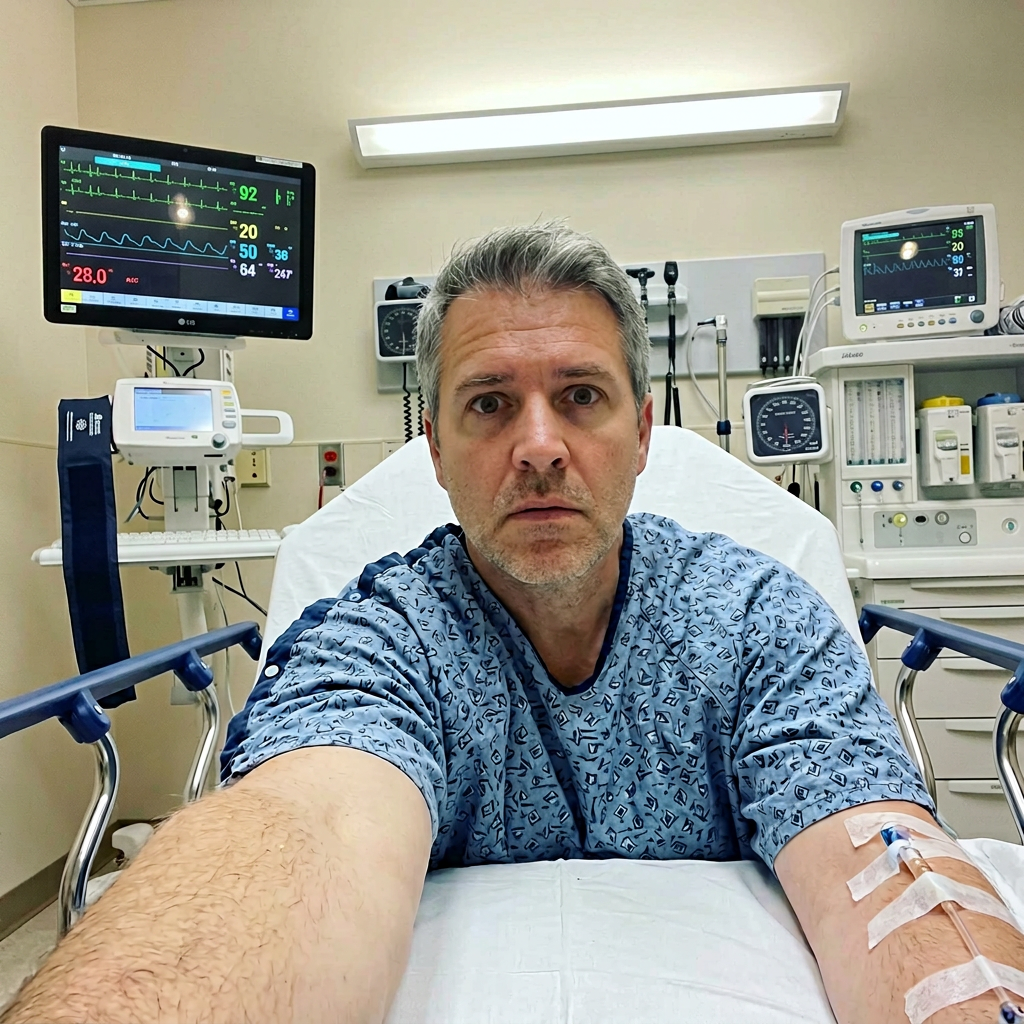
Two glasses of cabernet. That's all I had. I wasn't drunk. I wasn't even close. I was sitting across from a client I'd known for eight years, cutting into a filet, talking about his company's logistics restructuring, when the room started spinning.
Not the kind of dizzy where you grip the table and it passes. The kind where the floor rushes up at you and you can't stop it.
I grabbed the edge of the table. My water glass went over. My client, Dave, said my name. I heard it like it was coming through a wall. "Fletcher? Fletcher, you okay?"
Then I was on the floor. White tablecloth pulled halfway down with me. Silverware everywhere. A woman at the next table screamed. Dave was crouching over me saying something I couldn't understand.
The next thing I remember clearly is fluorescent lights. A hospital ceiling. Maggie's hand squeezing mine so hard her knuckles were white. And a doctor I'd never met standing at the foot of my bed holding a clipboard.
He wasn't smiling.
What the ER Doctor Found in My Blood
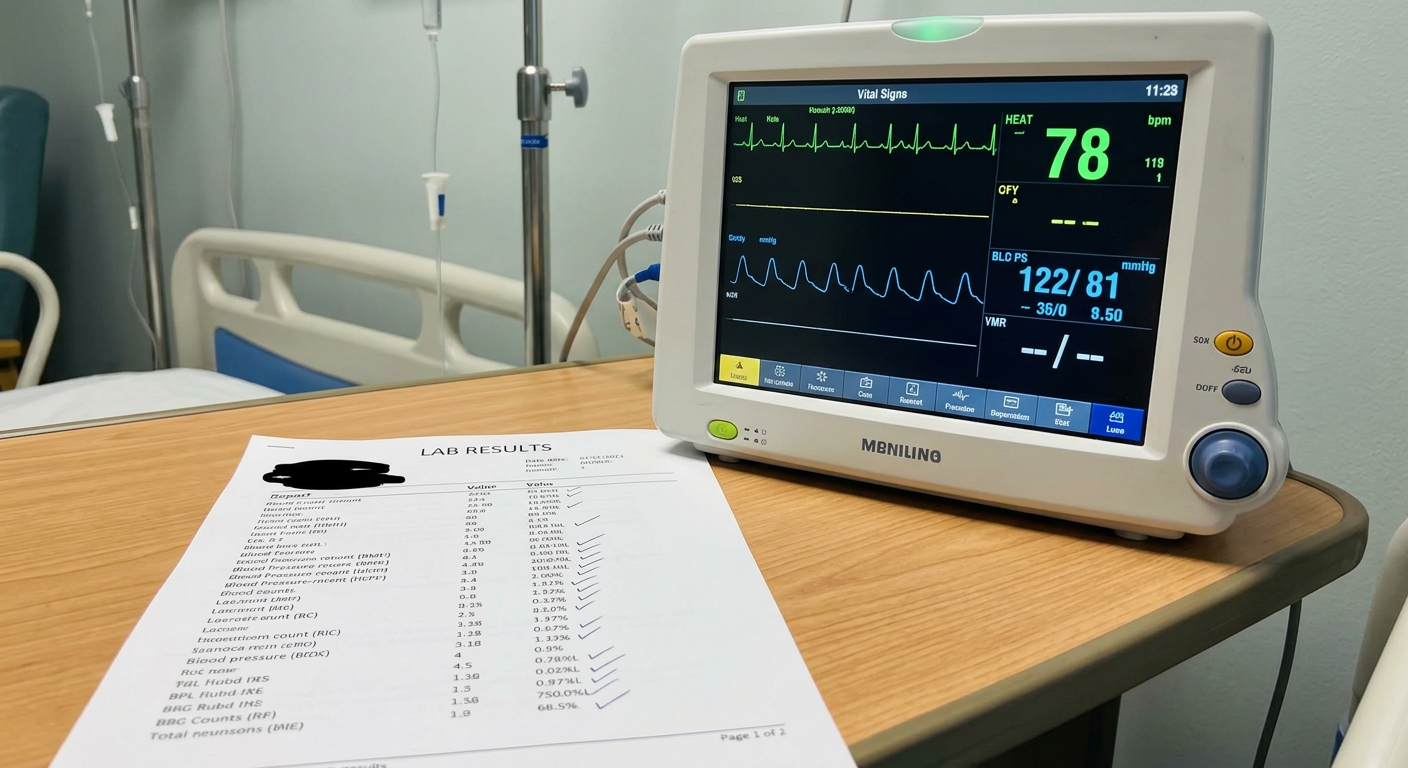
Dr. Patel was direct. No small talk. No "how are you feeling." He pulled a chair up to my bed and said, "Mr. Haines, how much do you drink?"
I told him the truth. Two glasses of wine with dinner. Most nights. Sometimes a bourbon on the weekend. That's it. I've been drinking like that for 25 years. Never blacked out. Never missed work. Never had a DUI. Never had anyone tell me I had a problem.
He nodded like he'd heard this exact answer a thousand times.
"I'm going to show you your bloodwork. I need you to understand what these numbers mean."
My ER Bloodwork:
My Numbers
Normal Range
He circled each number in red pen. Then he looked at me.
"Your ALT is 89. That's more than double the upper limit. Your AST is 76. Also nearly double. Your GGT is 112. That's the one that concerns me most. GGT is the most sensitive marker for alcohol-related liver stress. Yours is more than double what it should be. And your bilirubin is 2.1, which means your liver is struggling to process waste. That's why your skin and eyes may have started looking slightly yellow. Mr. Haines, your liver is in crisis."
Maggie's hand tightened on mine. I could feel her shaking.
I asked him how this was possible. Two glasses of wine. I'm not a heavy drinker. I've never been a heavy drinker.
That's when he said the thing that changed everything I thought I knew about alcohol.
What Happens to Your Body After 40 That Nobody Tells You
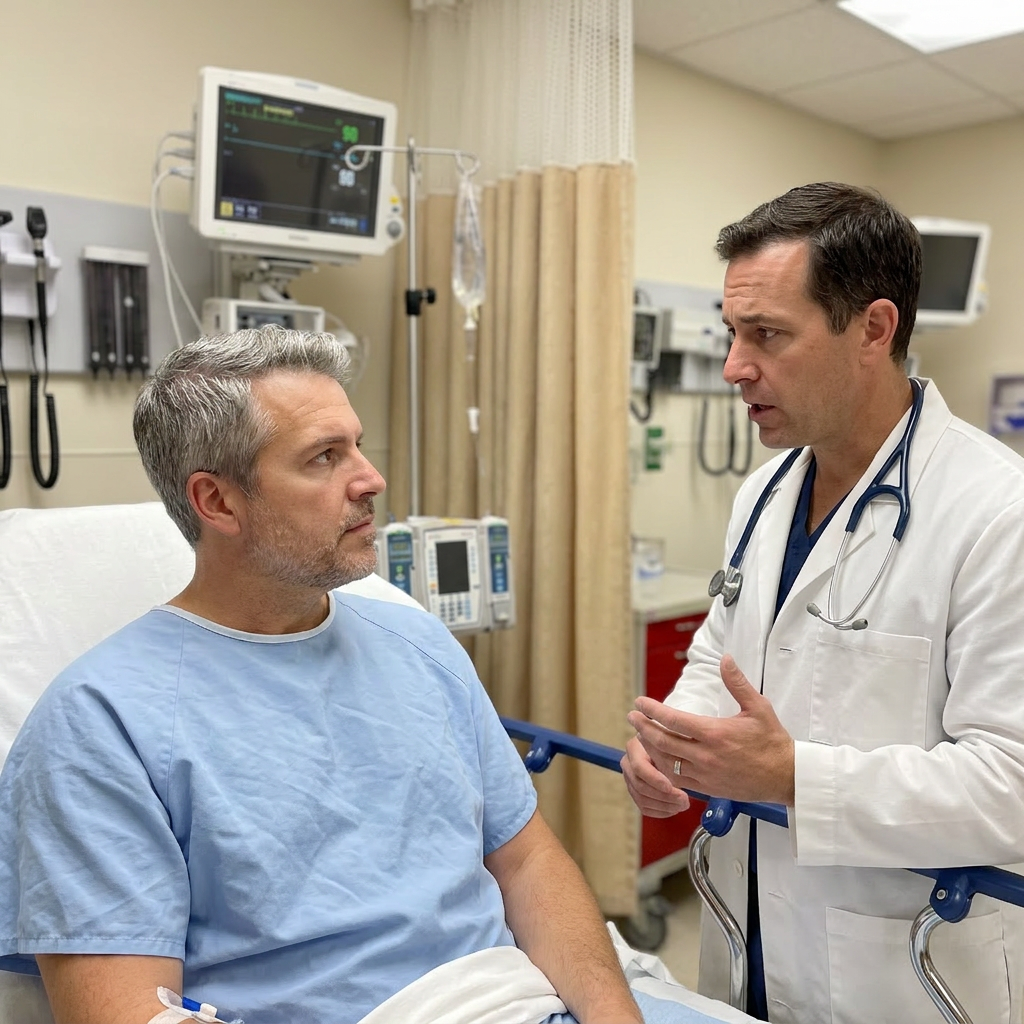
Dr. Patel pulled his chair closer. He said what he was about to explain is something most people never hear until they're in a hospital bed.
He explained it step by step. I'm going to write it exactly the way he told me, because every person over 40 who drinks even moderately needs to hear this.
Your Liver Enzymes Decline with Age
Your liver breaks down alcohol using two enzymes: ADH (alcohol dehydrogenase) and ALDH2 (aldehyde dehydrogenase). ADH converts alcohol into acetaldehyde, a toxic compound. ALDH2 then breaks acetaldehyde down into harmless acetate that your body can eliminate.
At 30, both enzymes work fast. You drink two glasses of wine, your liver processes it overnight, and you wake up fine. No damage. No accumulation.
After 40, production of both enzymes starts declining. By 50, most people have 30-40% less ADH and ALDH2 than they had at 30. The alcohol takes longer to break down. Acetaldehyde, the toxic intermediate, sits in your system longer. It's a carcinogen. It damages liver cells. It causes inflammation. And because it's not being cleared fast enough, it builds up night after night after night.
"Think of it like a drain," Dr. Patel said. "At 30, your drain was wide open. The same amount of water flowed through easily. At 57, the drain is 40% narrower. You're pouring the same amount of water, but it's backing up. Every night, a little more stays behind."
Your Liver Stops Regenerating as Fast
The liver is the only organ that can regenerate itself. At 30, your liver replaces damaged cells quickly. The two glasses of wine cause minor stress, the liver repairs overnight, and by morning it's back to baseline.
After 40, liver regeneration slows by 30-50%. The damage from last night's wine isn't fully repaired by tonight's wine. Each night, the balance tips a little further toward damage. After a decade of this, the accumulated damage becomes inflammation. After two decades, the inflammation becomes structural. That's fibrosis. Scar tissue replacing healthy tissue.
"You've been drinking the same amount for 25 years," Dr. Patel said. "But for the last 15 years, your liver has been falling behind. Not by a lot. By a little. Every single night. Tonight, it caught up with you."
Your Body Composition Changes
After 40, men lose muscle mass and gain visceral fat. Visceral fat is metabolically active. It produces inflammatory compounds that stress the liver independently of alcohol. So while your liver is already struggling with slower enzyme production and slower regeneration, it's also fighting inflammation from fat deposits it didn't have at 30.
"Alcohol plus aging plus visceral fat," Dr. Patel said. "That's the triangle. Any one of those alone is manageable. All three together is what put you on that floor tonight."
of moderate drinkers over 50 show elevated liver enzymes when tested. Most have never been tested. Most don't know until something goes wrong. I was one of them.
The Four Stages I Was Already In
Dr. Patel pulled up an image on the computer next to my bed. Four stages of liver damage.
Stage 1: Fatty Liver. Fat accumulates in liver cells. No symptoms. No pain. Your annual bloodwork may look normal because standard panels don't include GGT. You feel fine. 80-100 million Americans are in Stage 1 right now and don't know it.
Stage 2: Liver Inflammation (Hepatitis). The fat triggers chronic inflammation. Liver enzymes spike. Your liver starts losing filtering capacity. Toxins accumulate. Fatigue sets in. Brain fog. Bloating after meals. And sometimes, when the liver is overwhelmed by even a small amount of alcohol, your blood pressure drops suddenly and you collapse. That's what happened to me.
Stage 3: Fibrosis. Scar tissue replaces healthy liver tissue. The damage becomes structural. Yellowing skin. Dark urine. Persistent exhaustion. The liver is losing capacity it won't get back without aggressive intervention.
Stage 4: Cirrhosis. Irreversible scarring. Liver function drops below what's needed. Fluid buildup. Confusion. Bleeding. Transplant list. The man in the bed next to me in the ER that night was Stage 4. He was 61. He looked 80.
Dr. Patel pointed to Stage 2.
I looked at Maggie. She was crying. Quietly. The way she does when she's trying to be strong but can't hold it.
What the ER Doctor Told Me to Do
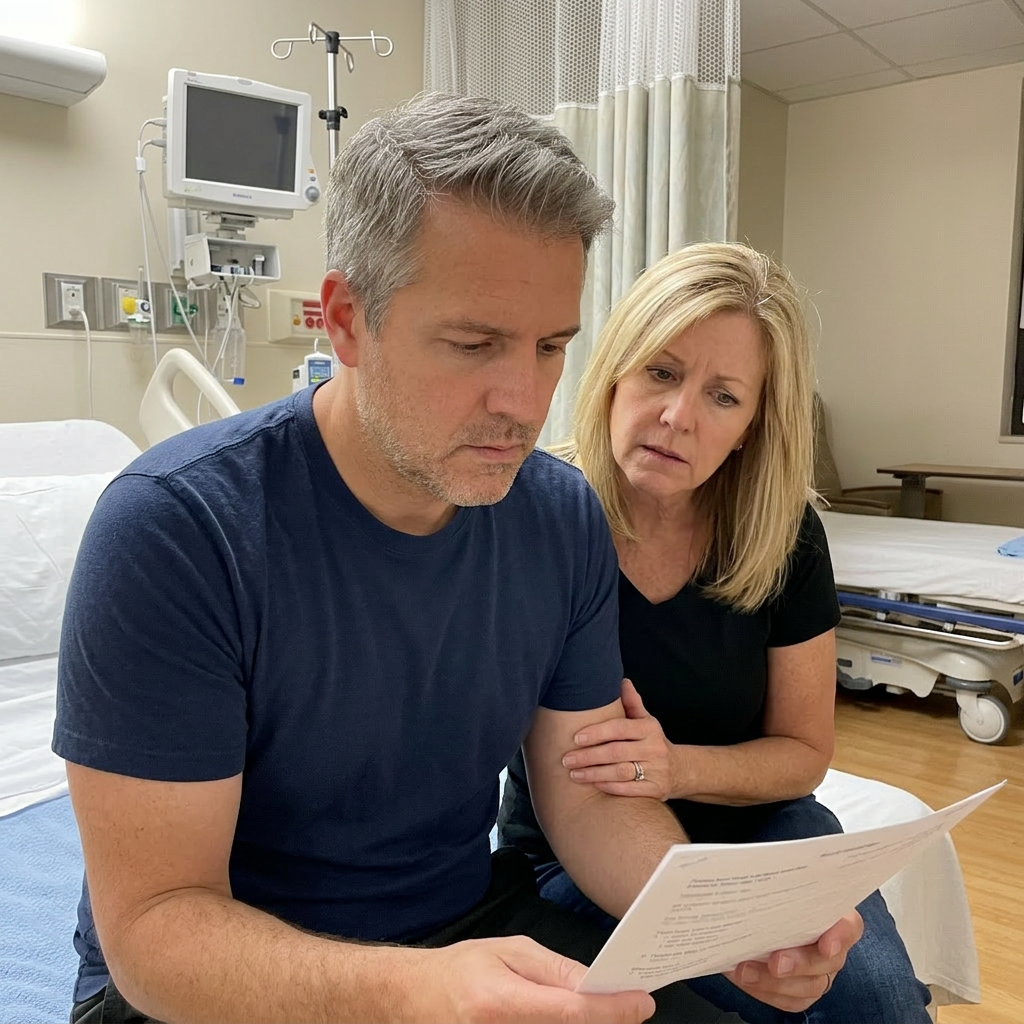
Dr. Patel didn't just diagnose me. He gave me a plan. Three things, written on a printed sheet he handed me before discharge.
First: Stop drinking immediately. Not reduce. Stop. "Your liver needs 60 to 90 days of zero alcohol to begin recovering from Stage 2 inflammation. There's no version of moderation that works right now."
Second: Follow up with my primary care doctor within two weeks for a full liver panel and ultrasound.
Third: Start a multi-pathway liver support formula immediately.
This is where he surprised me. I expected him to prescribe a drug. Instead, he said something I've never heard a doctor say in an ER.
He wrote down the name: Cloud9 Daily Restore.
I stared at it. A supplement. Recommended by an ER doctor. In a hospital. I must have looked skeptical because he continued.
"I know what you're thinking. I thought the same thing when a colleague at Mount Sinai told me about it. But I've had over 40 patients with Stage 2 liver inflammation use this formula alongside alcohol cessation. Every single one showed significant enzyme improvement within 90 days. The ones who just stopped drinking without liver support took 6 to 12 months to see the same results. Some never fully normalized."
He explained each ingredient and why it mattered.
Why the ER Doctor Recommended This Specific Formula
Dr. Patel walked me through the label the way a mechanic walks you through what's wrong with your engine. No sales pitch. Just science.
✓ DHM (Dihydromyricetin) 300mg
"This is the most important ingredient. DHM directly accelerates your ALDH2 enzyme, the one that breaks down acetaldehyde. Remember, acetaldehyde is the toxic compound that's been accumulating in your liver because your enzymes slowed down after 40. DHM essentially restores the enzyme activity you lost. Research from Tufts showed it enhances alcohol metabolism and reduces acetaldehyde accumulation significantly. This is what stops the damage at its source."
✓ NAC (N-Acetyl Cysteine) 600mg
"NAC is the precursor to glutathione. Glutathione is your liver's master detoxifier. It's the same compound we use in this ER to treat Tylenol overdose because it's that effective at protecting liver cells. 25 years of moderate drinking has depleted your glutathione reserves. At 600mg daily, NAC rebuilds them. A study from Virginia Commonwealth showed glutathione levels restored within 8 weeks of consistent NAC supplementation."
✓ Milk Thistle 250mg (80% Silymarin)
"Silymarin stabilizes hepatocyte membranes. Your liver cells are leaking because their membranes are damaged from years of processing acetaldehyde. Silymarin repairs those membranes and prevents further leakage. But it has to be 80% standardized extract. Most drugstore brands are 30%. At 30%, you'd need to take eight capsules a day to get a clinical dose. This has it at 80% in one capsule."
✓ Thiamine (B1) 100mg + B-Complex (B2, B6, B9, B12)
"Alcohol depletes B vitamins faster than any other substance. Thiamine deficiency is the most common nutritional deficiency in moderate drinkers over 50, and most don't know it because it doesn't show up on standard bloodwork. Thiamine at 100mg is a therapeutic dose. Most supplements contain 1 to 3mg. Your liver needs thiamine to fuel its regeneration cycle. Without it, recovery stalls even if you stop drinking."
When he finished, I asked him why my regular doctor had never mentioned any of this in 25 years of annual checkups.
He paused. Then he said something I'll never forget.
"The liver health industry generates over $14 billion per year."
"Hepatology consults run $400 to $600 per visit. Liver imaging is $300 to $800. Biopsies cost $3,000 to $5,000. Annual monitoring plans for liver disease run $2,000 to $5,000 depending on insurance. The system is designed to monitor decline, not reverse it."
"A formula that costs less than $2 a day and actually addresses the root cause of alcohol-related liver damage is not something the system is built to recommend. It's not that your doctor doesn't care. It's that the system he works in doesn't incentivize solving the problem for $59."
"I recommend it because I work in emergency medicine. I see what happens when the system fails people. I see Stage 4. I see the man in the bed next to yours. I'd rather give you something that costs $59 and works than see you back here in 18 months with a liver that's past saving."
Maggie was writing everything down on the back of a hospital brochure. Every word. She ordered it on her phone before we left the parking lot.
 See the Formula the ER Doctor Recommended →
What Happened Over the Next 90 Days
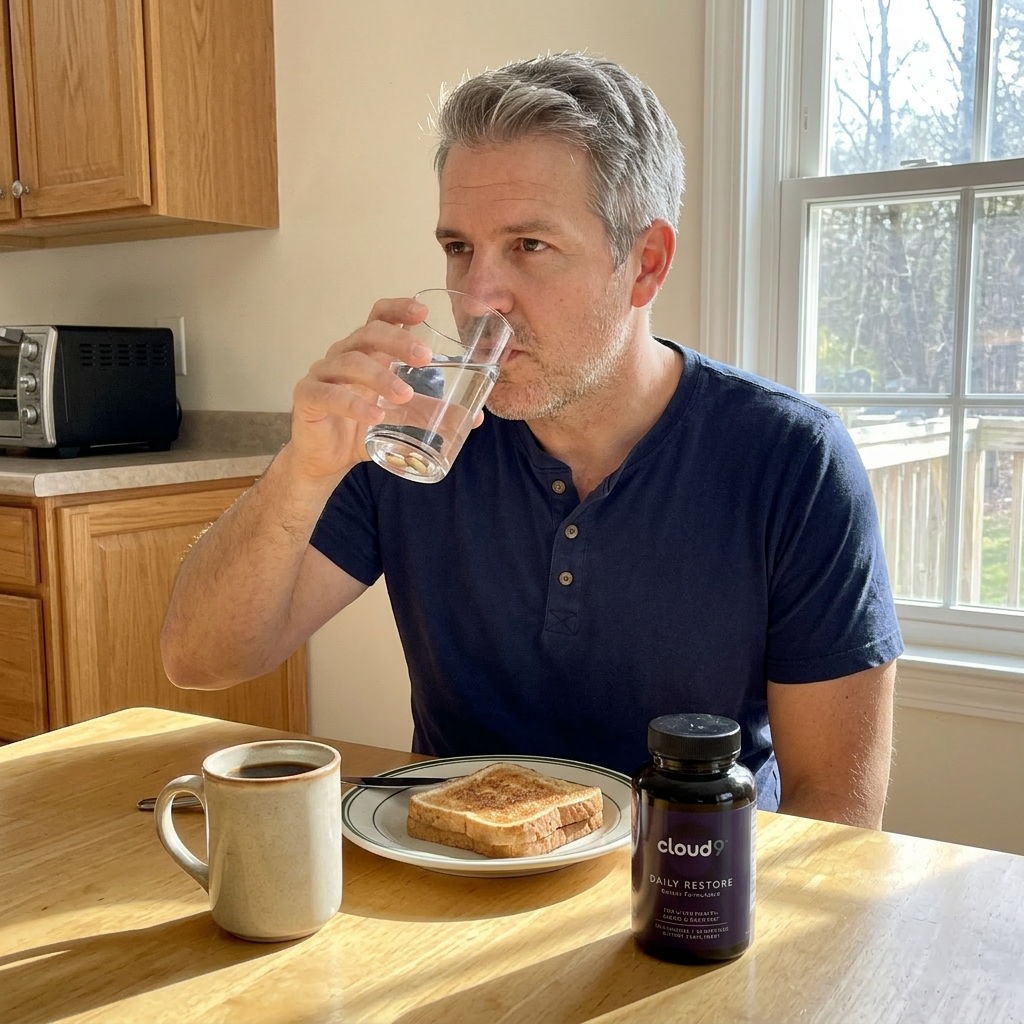
I started taking Daily Restore the morning it arrived. Two capsules with breakfast. I hadn't touched alcohol since the night of the collapse. Maggie had poured every bottle of wine in the house down the drain by the time I got home from the hospital.
Week 1: The Fog Started Lifting
I didn't realize how foggy my brain had been until the fog started clearing. By day five, I could focus on a book for more than 30 minutes. I could remember where I put my keys. I could follow a conversation without losing the thread. Maggie said I seemed "sharper." I was. I just didn't know how dull I'd become.
Week 2: The Exhaustion Stopped
For the past two years, I'd been collapsing on the couch by 4 PM every day. I thought it was aging. It was my liver. By week two, I was active until 9 PM. Working on projects. Walking with Maggie. Reading after dinner instead of sleeping through it. The energy didn't come back slowly. It came back like someone flipped a switch.
Week 3: The Bloating Disappeared
I'd been bloated after every meal for years. That uncomfortable fullness that made me unbutton my pants at the dinner table. By week three, it was gone. I ate the same meals. My stomach was flat by bedtime. Maggie noticed before I did. "You look thinner," she said. I wasn't thinner. My liver had just stopped retaining fluid.
Week 4: I Slept Through the Night
I'd been waking up at 2 AM every night for as long as I could remember. Eyes wide open. Racing thoughts. Couldn't fall back asleep for an hour. Dr. Patel said that's a classic sign of liver stress. Your liver does its heaviest detoxification between 1 and 3 AM. When it's overloaded, it wakes you up. Week four, I slept from 10:30 PM to 6 AM. Straight through. I couldn't remember the last time that happened.
Week 6: My Follow-Up Bloodwork
Dr. Callahan, my primary care doctor, ran a full liver panel.
The Numbers Nobody Expected
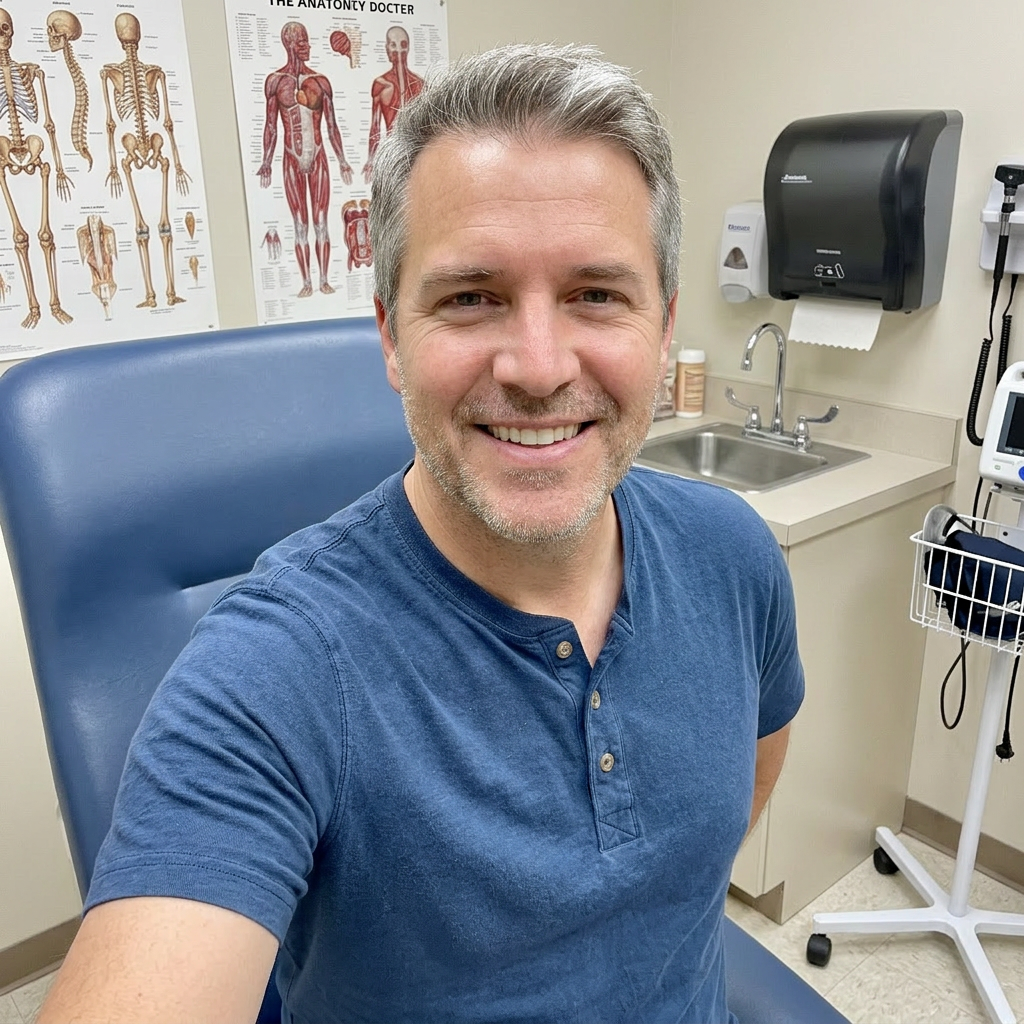
ER Night vs. 6-Week Follow-Up:
ER Night (September)
6-Week Follow-Up
Dr. Callahan looked at the numbers. Then he looked at me. Then he looked at the numbers again.
I told him about Daily Restore. About the ER doctor who recommended it. About the five pathways. He pulled up the ingredient list, read through it, and nodded slowly.
"Multi-pathway. Clinical doses. DHM, NAC, high-potency silymarin, therapeutic thiamine. This is exactly what the research supports for Stage 2 recovery." He wrote it in my chart. Then he said something that surprised me: "I'm going to start recommending this to my other patients with elevated liver enzymes."
At 90 days, my numbers were even better: ALT 22. AST 18. GGT 29. Bilirubin 0.6. All normal. All better than they'd been in 15 years.
See the Formula Two Doctors Endorsed →I'm Not the Only One Who Got a Wake-Up Call
"I passed out at my son's baseball game. Two beers. The ER said my liver enzymes were through the roof. I started Daily Restore the next day. Eight weeks later my enzymes were normal. My doctor said he's never seen someone recover from Stage 2 this fast. I keep the ER bracelet on my nightstand as a reminder."
Mike T., 54, Denver, CO
"I collapsed in the shower after a glass of wine at a dinner party. My wife called 911. The ER doctor said my GGT was 98 and my liver was inflamed. He recommended Daily Restore. I was skeptical. But by week six my enzymes were completely normal. I haven't been back to the ER since."
Robert K., 58, Nashville, TN
"My doctor found elevated liver enzymes on a routine blood panel. ALT was 71. He said if I didn't fix it I'd be looking at a liver biopsy. A friend told me about Daily Restore. Three months later, ALT was 28. My doctor cancelled the biopsy. He asked what I was taking and wrote it down."
David P., 61, Raleigh, NC
"I'm a nurse. I've seen what Stage 4 liver disease looks like. When my own liver panel came back elevated after 20 years of wine with dinner, I wasn't going to wait. I started Daily Restore because the ingredient profile matched exactly what we learn in clinical training. Eight weeks. All enzymes normal. This is what I recommend to every moderate drinker over 40."
Linda S., 52, Tampa, FL
What My ER Visit Cost vs. What Actually Fixed the Problem
My ER visit that night cost $4,200 after insurance. The ambulance alone was $1,800. The bloodwork, the monitoring, the IV, the bed for four hours. $4,200 to tell me my liver was failing.
The follow-up ultrasound was $340. The hepatology referral was $480. The quarterly monitoring they recommended was going to cost $1,200 per year minimum.
The formula that actually fixed the problem costs less than a glass of the wine that caused it.
I bought the 6-month supply because Dr. Patel was clear: liver regeneration takes 60 to 90 days minimum. One month starts the process. Three months stabilizes it. Six months locks in the recovery. At $39 per bottle, a 6-month supply costs less than my ER copay.
Check Today's Availability →Cloud9 offers a full refund, even on empty bottles. 90 days to try it. If your enzymes don't improve, if you don't feel the difference, you get every penny back. No questions. No hoops. The risk is theirs, not yours.
Six Months Later
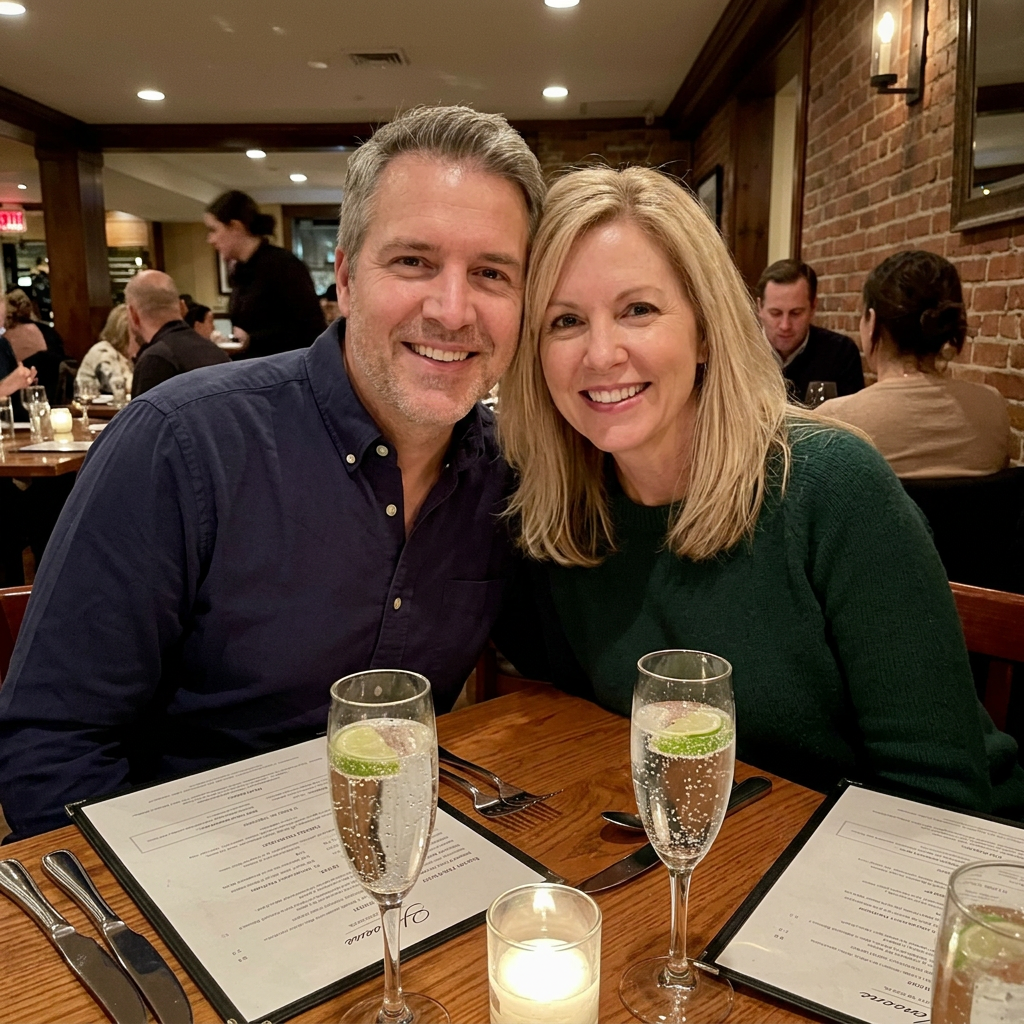
I still take Daily Restore every morning. Two capsules with breakfast. It takes five seconds.
My last liver panel: ALT 19. AST 17. GGT 24. Bilirubin 0.5. All perfect. Better than they've been in 20 years. Dr. Callahan said my liver looks like it belongs to a man in his thirties.
I don't drink anymore. Not because I can't. Because I understand what it was doing. For 25 years, my liver was fighting a battle I couldn't see, against an amount of alcohol I thought was harmless. Two glasses. Every night. And my body changed around that habit without telling me until it put me on the floor of a restaurant in front of a client and a dining room full of strangers.
Maggie doesn't watch me like a hawk anymore. She stopped sleeping with her phone on her nightstand set to call 911. Tyler and Hannah stopped texting her every morning to ask if I was okay. We eat out again. We live again. The fear is gone because the numbers say the danger is gone.
Dave, my client, called me the day after the collapse. He didn't ask about the logistics project. He asked if I was okay. Then he said, "Fletcher, I've been having two Scotches every night for 30 years. Should I get my liver checked?" I told him everything Dr. Patel told me. He ordered Daily Restore that afternoon.
If You Drink Moderately and You're Over 40
I didn't know my liver was failing. I had no symptoms I couldn't explain away. Fatigue? I'm 57. Brain fog? Stress. Bloating? Big meals. Waking up at 2 AM? Aging.
None of it was aging. All of it was my liver.
If you're over 40 and you've been drinking moderately for years, a glass of wine with dinner, a couple of beers, a bourbon on weekends, your liver is processing alcohol differently than it did at 30. Your enzymes are slower. Your regeneration is slower. The damage is accumulating whether you feel it or not.
You can wait until you collapse at a dinner. You can wait until the ER doctor circles your numbers in red. Or you can give your liver the support it needs now, before it puts you on the floor.
- Fatigue that sleep doesn't fix
- Brain fog that started in your 40s or 50s
- Bloating after meals
- Waking up between 1 and 3 AM
- Hangovers that last two days when they used to last two hours
- Dark circles under your eyes
- Feeling "off" the morning after just one or two drinks
Those aren't aging. That's your liver falling behind. And a $14 billion industry would rather monitor the decline than fix it for $1.97 a day.
Daily Restore is what the ER doctor recommended to me while I was lying in a hospital bed with my wife crying beside me. It's what reversed my liver enzymes in 6 weeks. It's what two doctors have now written in my chart.
It's backed by a 90-day money-back guarantee. You risk nothing.
See the Formula the ER Doctor Recommended →
Two glasses of wine.
25 years.
One collapse.
Don't wait for the floor to tell you.
DISCLAIMER: This article represents the personal experience of Fletcher Haines and is provided for informational purposes only. Individual results may vary. The statements made regarding Cloud9 Daily Restore have not been evaluated by the Food and Drug Administration. This product is not intended to diagnose, treat, cure, or prevent any disease. Always consult your physician or other qualified health provider before starting any new supplement regimen.
The testimonials and results presented represent individual experiences and outcomes that may not be typical.
© 2025 Fletcher Haines. All rights reserved.