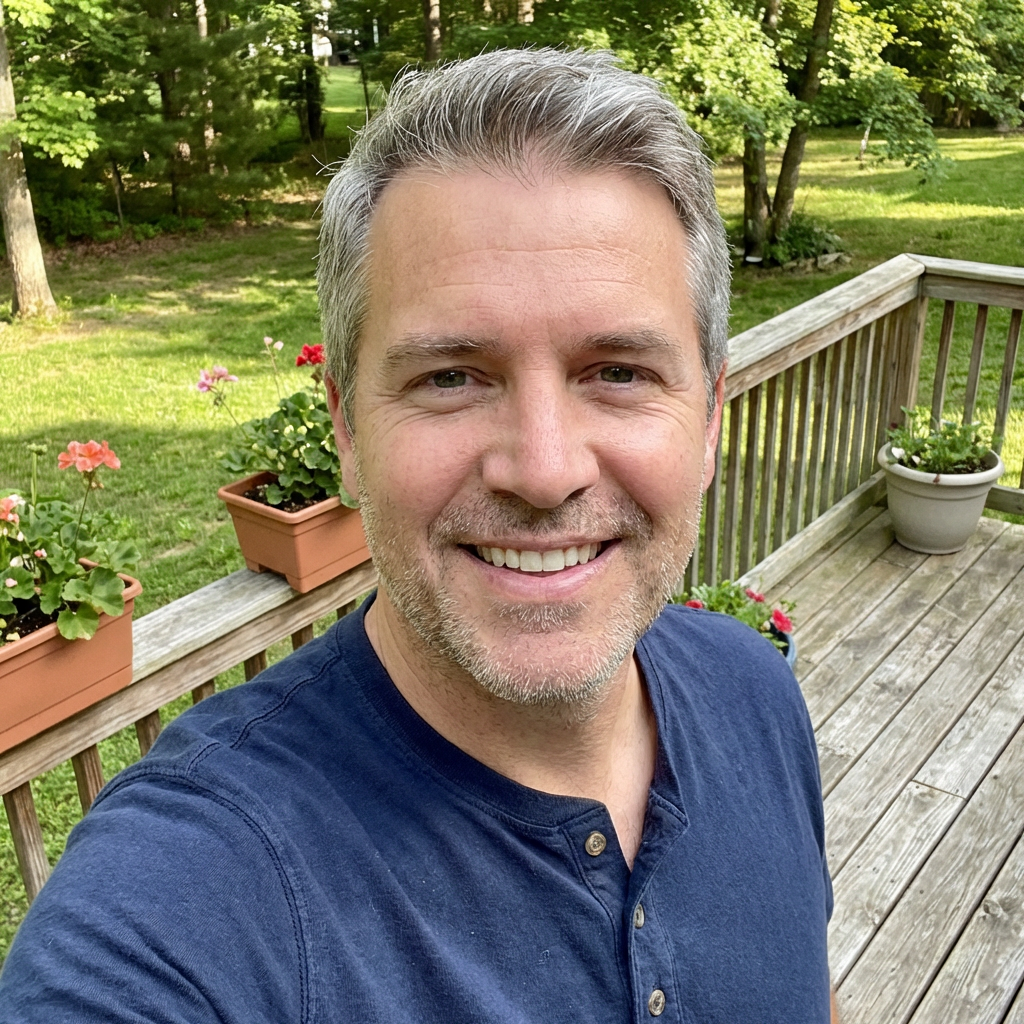
My Doctor Said Lose the Belly. Three Diets, Two Trainers, and $4,000 Later — It Was Never About the Food.
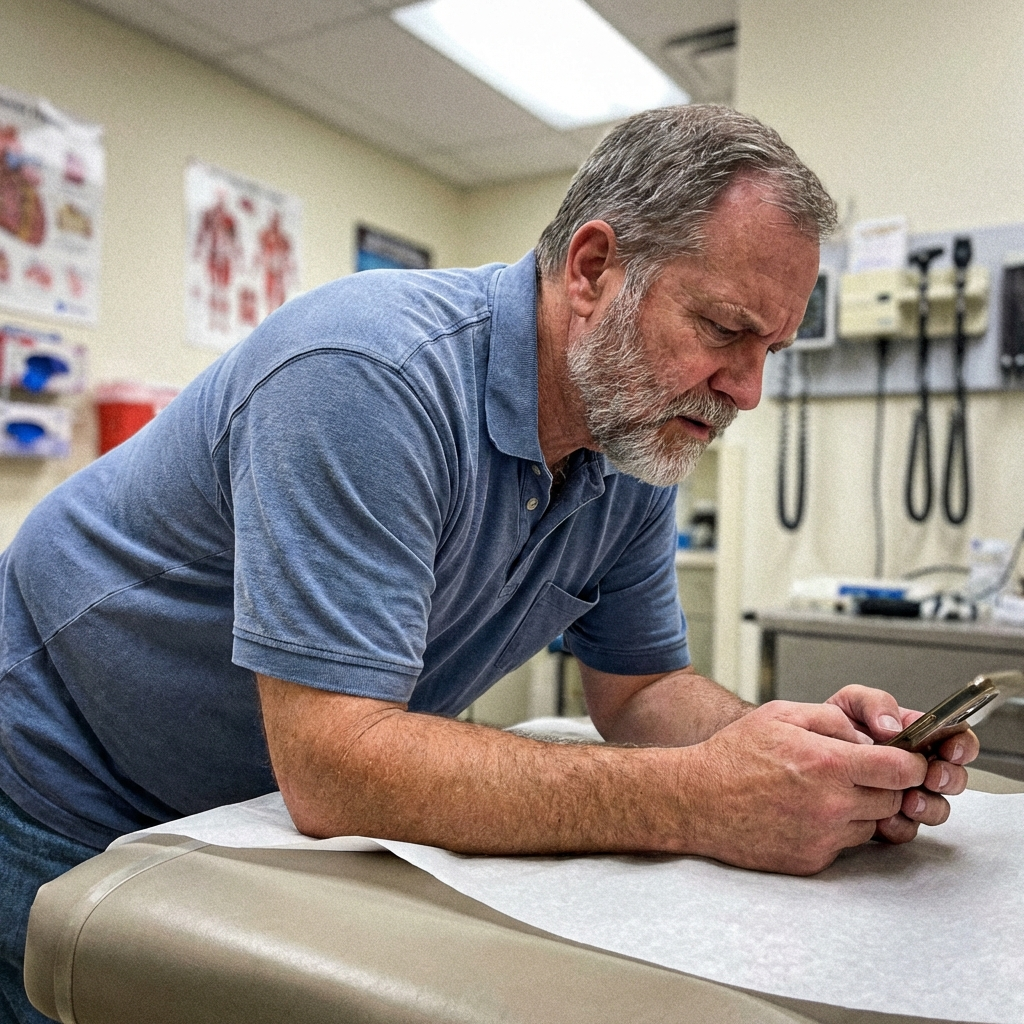
I spent 18 months starving myself, punishing my body, and hemorrhaging money trying to lose a belly that wasn't caused by what I was eating. It was caused by an organ I never once thought about — one that had been quietly failing for 25 years.
The Appointment That Started Everything
September 14th, 2024. A Tuesday. I remember because Maggie — my wife of 31 years — had made me schedule my annual physical three times before I actually went. "Fletcher, you're 57. You don't get to skip this anymore."
I'd been putting it off because I already knew what Dr. Raymond Callister was going to say. I'd watched it happen in the mirror every morning for two years. The belly. This hard, distended, round thing that had slowly taken over my midsection like an uninvited tenant who wouldn't leave.
I used to wear 34-inch waist pants. I was wearing 38s now and leaving the top button undone.
Dr. Callister is a good man. Direct. Old-school. The kind of doctor who still looks you in the eye instead of typing into a laptop. He'd been my physician for 14 years.
He had me step on the scale. 217 pounds. I'd been 186 at my physical three years earlier.
He looked at me over his glasses. "Fletcher, we need to talk about this belly."
I nodded. I knew it was coming.
"You've put on 31 pounds, and it's all concentrated in your midsection. Your blood pressure is up. Your fasting glucose is borderline. If we don't address this now, we're looking at metabolic syndrome, possible pre-diabetes, and significantly increased cardiac risk."
He pulled up a BMI chart on his screen. Drew a circle around the "obese" category with his pen.
"I need you to lose 30 pounds. Cut the carbs, cut the portions, increase your activity. We'll recheck in six months."
— Dr. Raymond Callister, September 2024
I sat in my car in the parking lot for twenty minutes after that appointment. I couldn't start the engine. My hands were shaking — not from fear, from shame. Pure, bone-deep shame.
I spent 25 years as an operations consultant. I ran departments. I optimized supply chains for Fortune 500 companies. I solved problems that other people said couldn't be solved. And now I couldn't even control my own body.
Maggie was in the kitchen when I got home. She could read my face before I said a word.
"That bad?"
"He wants me to lose 30 pounds. Says I'm heading toward diabetes."
She put down the dish towel. Pulled out a chair. "Okay. So we fix it. Together."
That night, I started researching diets. If this was a project, I'd treat it like one. Define the problem. Research solutions. Execute. Measure results.
I had no idea that the problem itself had been misdiagnosed.
Diet #1: Keto — Three Months of Misery
I went all in. That's how I do everything. Maggie cleared the pantry. Out went the bread, the pasta, the rice. In came avocados, bacon, butter, and enough eggs to start a small farm.
First two weeks were brutal. The "keto flu" hit me like a freight train. Headaches. Irritability. Brain fog so thick I couldn't read a newspaper. Maggie told our daughter Hannah on the phone, "Your father has become unbearable. Pray for me."
But I pushed through. Because that's what you do. You push through.
Month one: I lost 8 pounds. Felt cautiously optimistic. But when I looked in the mirror, the belly was exactly the same. The weight had come off my arms and face. My wedding ring was loose. My belly was not.
Month two: Lost another 4 pounds. Arms getting thinner. Face gaunt. Belly — unchanged. Hard. Round. Protruding. Like it existed in its own reality, immune to whatever the rest of my body was doing.
Month three: Lost 2 more pounds. Total: 14 pounds. I looked in the mirror and saw a thin man with a pregnant belly. My face was drawn. My energy was shot. And the thing I was trying to shrink hadn't moved a single inch.
Maggie was careful with her words, but I could see it in her eyes. "Honey, maybe keto isn't right for your body type. Maybe try something else."
She was being kind. What she meant was: this isn't working, and you look worse than when you started.
Keto Results After 3 Months:
• Weight lost: 14 lbs
• Belly circumference change: 0 inches
• Muscle mass lost: Significant (arms, shoulders, legs)
• Energy level: Crashed
• Cost: ~$600 in specialty groceries
Diet #2: Intermittent Fasting — The Hunger That Changed Nothing
I switched to 16:8 intermittent fasting. No food before noon. Last meal by 8 PM. The theory was elegant: restrict your eating window, force your body to burn stored fat during the fasting period.
I am not a man who skips breakfast. For 57 years, I've eaten breakfast. Eggs. Toast. Coffee with cream. It's not just a meal — it's a ritual. It's the twenty minutes I spend reading the paper before the day starts. Taking that away felt like someone had reached into my morning and ripped out its spine.
The hunger was constant. Not a gentle reminder — a roaring, angry, all-consuming presence that sat in my stomach from 6 AM until noon. I'd snap at Maggie. I'd lose focus. I'd stand in the kitchen at 11:45 AM staring at the clock like it was the countdown to a prison release.
Six weeks in, I'd lost 5 pounds. The belly was exactly the same. Exactly. The same.
I started measuring it with a tape measure every Sunday morning. 43 inches. Week after week. 43 inches. Once it was 43.5. I threw the tape measure in the trash.
Maggie found it in the garbage that evening. She didn't say anything. She just put it back in the drawer.
"I don't understand," I told her one night. "I'm barely eating. I'm exercising. I'm doing everything right. Why won't it go away?"
She didn't have an answer. Neither did the internet. Every article said the same thing: caloric deficit. Eat less. Move more. The belly will follow.
The belly did not follow.
The Trainer: $200 a Session, $2,400 Total, Zero Results
Maggie suggested a personal trainer. "Maybe you need someone who knows what they're doing. Someone who can target the belly specifically."
I found Marcus through a recommendation at our gym. Former college athlete. Certified personal trainer. Specialized in "body recomposition for men over 50." His rate: $200 per session, twice a week.
Marcus was good. Professional. Knowledgeable. He put me on a program — compound lifts, HIIT intervals, core work. Planks until my arms shook. Russian twists until I wanted to scream. Cable crunches, dead bugs, bicycle kicks.
"We're going to melt that belly off you, Fletcher," he said during our first session, clapping me on the shoulder.
He believed it. I believed it. We were both wrong.
Six weeks. Twelve sessions. I got stronger, I'll give him that. My legs were solid. My shoulders filled out again. I could hold a plank for two minutes.
The belly: 43 inches.
Marcus started getting frustrated, though he tried to hide it. He adjusted my macros. Changed the rep schemes. Added morning fasted walks. Nothing.
After session twelve, he sat me down.
"Fletcher, I'm going to be honest with you. I don't understand what's happening. In 15 years of training, I've never seen someone follow a program this closely and not lose abdominal fat. There might be something else going on. Something medical."
I thanked him. Wrote the last check. Drove home.
That night, sitting at the kitchen table, I did the math. Keto groceries: $600. Intermittent fasting supplements and electrolyte powders: $200. Marcus: $2,400. Various books, apps, and gadgets: $800.
Total spent: $4,000. Total belly inches lost: zero.
Total spent on diets, trainers, and programs. Belly measurement at the end: identical to day one. 43 inches.
Hilton Head — The Week I Stopped Looking in Mirrors
June 2025. Our family beach trip to Hilton Head Island. We'd done it every year for fifteen years — me, Maggie, our son Tyler (29) and his wife Lauren, our daughter Hannah (26) and her boyfriend. A week of seafood, sand, and family time.
I used to love this trip. Used to be the first one in the water, tossing a football with Tyler, body-surfing with Hannah until she screamed laughing.
This year, I packed three loose linen shirts. The kind that hang over your belt. I wore them every single day, even on the beach.
I did not take my shirt off once.
Tyler asked me to play football in the water on the second day. I made an excuse about my shoulder. He looked confused — I'd never had shoulder problems.
Hannah wanted a photo of all of us in front of the sunset on day four. I positioned myself behind Tyler, angled my body, crossed my arms over my midsection. I've done this in every photo for two years. I'd become an expert at hiding behind other people.
Maggie noticed. Of course she noticed. She'd been married to me for 31 years.
That night, after the kids went back to their rental, she found me sitting on the balcony in the dark. I'd had two glasses of wine. A normal Tuesday night. I was staring at the ocean, listening to the waves, feeling like an old man trapped in a body I didn't recognize.
"Fletcher."
I didn't turn around.
"Fletcher, look at me."
I turned. She was standing in the doorway, arms crossed, and her eyes were wet.
"You didn't go in the water once this whole trip. You haven't been in a single photo without hiding behind someone. Our son asked you to throw a football and you lied about your shoulder." Her voice cracked. "What is happening to you?"
I couldn't answer for a long time. When I finally spoke, it came out broken.
"I can't make it go away, Maggie. I've tried everything. I don't know what's wrong with me."
She sat down next to me. Took my hand. We sat there for an hour without saying anything.
When we finally went inside, she said one thing: "When we get home, you're seeing a different doctor. Not Ray. Someone new. Someone who will actually figure this out."
— Maggie, Hilton Head Island, June 2025
The Second Opinion That Changed Everything
Maggie found Dr. Priya Narasimhan through a friend who'd had thyroid issues. An internist at Atrium Health in Charlotte — younger than Dr. Callister, more methodical, the kind of doctor who orders tests first and forms opinions after.
I told her everything. The belly. The diets. The trainer. The $4,000. The fact that I'd lost weight everywhere except where it mattered. She listened without interrupting, taking notes on a yellow legal pad like a lawyer building a case.
When I finished, she leaned back in her chair.
"Fletcher, I want to run a comprehensive panel. Not the standard annual physical panel — I want liver function, lipid subfractions, insulin sensitivity, inflammatory markers, and an abdominal ultrasound. Something about what you're describing doesn't fit a simple dietary issue."
"What do you think it is?" I asked.
"I have a theory. But I don't want to say it until I see the numbers."
Three days later, I was back in her office. She had the results printed out on her desk — not on a screen, on paper, laid out in front of her like evidence in a trial. Her expression was serious but not alarmed. More like... confirmed.
"Fletcher, I found your problem. And it explains everything — the belly, why the diets didn't work, why the training didn't help. It also explains things you probably haven't connected yet. The fatigue. The brain fog. The bloating after meals."
I sat up straighter. She was right. I'd been tired for years. I'd blamed it on aging. And the bloating — God, the bloating. Every dinner, no matter what I ate, my stomach would swell like I'd swallowed a basketball. I'd assumed it was just "getting older."
"Your liver is functioning at approximately 41%."
My liver function at diagnosis. More than half my liver's capacity — gone. And I had no idea.
I stared at her. "41 percent? How is that possible? I feel... I mean, I'm tired, but I feel basically fine."
"That's exactly the problem," she said. "Your liver has no pain receptors. It can lose more than half its function and never send you a pain signal. By the time you feel something is wrong, the damage is often severe. Yours has been declining for years — probably decades."
She pulled up my bloodwork on her screen.
Fletcher's Blood Work — July 2025:
• ALT: 128 (Normal: 7-35) — 3.7x normal
• AST: 112 (Normal: 8-35) — 3.2x normal
• GGT: 187 (Normal: 9-48) — 3.9x normal
• Bilirubin: 2.8 (Normal: 0.3-1.2) — 2.3x normal
• Albumin: 3.1 (Normal: 3.5-5.0) — Below normal
• Bile acid levels: Severely depressed
"These numbers tell a very clear story," Dr. Narasimhan said. "Your liver enzymes are dramatically elevated — that's the inflammation and cellular damage. But the number I want you to focus on is the bile acid level. It's extremely low."
"What does bile have to do with my belly?"
What she told me next was the single most important thing any doctor has ever said to me. And I'm going to explain it carefully, because if you're reading this with a stubborn belly that won't respond to diet or exercise, this might be the answer nobody has given you either.
The Mechanism: Why Your Belly Won't Shrink When Your Liver Can't Do Its Job
Your liver produces bile. You might vaguely remember that from high school biology. But here's what nobody tells you about what bile actually does:
Bile is the ONLY substance in your body that can break down dietary fat for absorption and metabolism. Without adequate bile, fat doesn't get processed. It doesn't get converted to energy. It doesn't get distributed normally. It gets stored — and it gets stored in the most convenient location your body can find.
Your midsection.
Dr. Narasimhan drew a diagram on her legal pad:
The Bile-Belly Connection:
1. Healthy liver → produces adequate bile → dietary fat gets broken down → metabolized for energy → flat midsection
2. Compromised liver (41% function) → bile production drops drastically → dietary fat CAN'T be broken down → unmetabolized fat gets stored → accumulates around midsection → hard, distended belly that no diet can fix
This is why keto didn't work — high-fat diet + insufficient bile = MORE unmetabolized fat stored in your belly. Keto may have actually made it worse.
"Fletcher, you could eat 1,200 calories a day, and if your liver can't produce enough bile to metabolize the fat in those calories, your body will store it in your midsection. You can't exercise your way out of this. You can't diet your way out of it. The problem isn't your intake. The problem is your liver's inability to process what you take in."
I sat there, speechless.
Eighteen months. Three diets. Two trainers. $4,000. And the answer was an organ I'd never once considered.
"That's why the keto diet didn't touch the belly," she continued. "Keto is extremely high in fat. You were flooding your body with fat while your liver couldn't produce the bile to break it down. You were essentially feeding the problem."
I felt something between relief and rage. Relief because I finally had an answer. Rage because no one — not Dr. Callister, not the internet, not Marcus, not a single diet book — had ever suggested checking my liver.
"There's more," she said. "The bile deficiency explains the bloating after meals — undigested fat sitting in your gut ferments and produces gas. The fatigue? Your body isn't converting fat to energy efficiently. The brain fog? Your liver isn't clearing toxins from your blood fast enough, and they're crossing the blood-brain barrier. Everything you've been experiencing is connected to one organ."
— Dr. Priya Narasimhan, Atrium Health, Charlotte NC
25 Years of Wine With Dinner — The Invisible Damage
I asked the question I already knew the answer to. "What caused this?"
Dr. Narasimhan didn't flinch. "How much do you drink, Fletcher?"
I told her the truth. A glass or two of wine with dinner, almost every night for 25 years. Bourbon on weekends — maybe two or three fingers, Friday and Saturday. Social drinking at events. Nothing excessive. Nothing that would make anyone look twice.
"That's your answer," she said simply.
I wanted to argue. I'm not a heavy drinker. I've never been drunk at work. Never missed a day. Never had a DUI. Never embarrassed my family. I drink like every other person I know — wine with dinner, a cocktail on weekends.
"Fletcher, I need you to hear this clearly. Your drinking pattern is shared by roughly 70% of American adults over 40. And it's the single most common cause of gradual liver deterioration I see in my practice. Not binge drinking. Not alcoholism. Twenty-five years of one to two glasses a night."
She pulled up a research summary on her screen.
What 25 Years of "Moderate" Drinking Does to Your Liver:
• Years 1-10: Liver compensates easily. No symptoms. No visible damage. You feel fine because your liver has enormous reserve capacity.
• Years 10-15: Fat begins accumulating in liver cells (hepatic steatosis). Bile production starts declining. You might notice clothes fitting tighter around the middle. You blame it on age.
• Years 15-20: Inflammatory markers rise. Liver function drops below 60%. Belly fat becomes persistent and resistant to diet. Energy declines. You blame it on stress, aging, "slowing metabolism."
• Years 20-25: Liver function drops below 50%. Bile production severely compromised. Hard, distended belly. Chronic bloating. Fatigue. Brain fog. Disrupted sleep. You've normalized all of it.
Source: American Liver Foundation, Progressive Hepatic Decline in Social Drinkers, 2024
Every glass of wine produces acetaldehyde — a compound 30 times more toxic than alcohol itself. A healthy liver neutralizes it quickly. But over decades, the repeated exposure creates a slow cascade of inflammation and cell death. Your liver never gets a chance to fully recover before the next glass arrives.
"Think of it like a credit card," Dr. Narasimhan said. "Every glass is a charge. Your liver has been making minimum payments for 25 years. The balance has been growing the whole time. Your belly — that's the interest."
I sat in that office, 57 years old, a retired operations consultant who'd spent his career solving complex problems — and I realized I'd been trying to solve the wrong problem for 18 months. The belly wasn't a diet problem. It was a liver problem. And every glass of wine I'd had since 1999 had contributed to it.
Then Maggie Said the Words I Was Dreading
That night, I sat Maggie down at our kitchen table — the same table where we'd shared thousands of dinners with wine — and told her everything. The 41%. The bile deficiency. The mechanism. Why every diet had failed. Why the belly wasn't about food.
She listened the way Maggie always listens. Completely still, completely focused, processing everything before responding. Thirty-one years of marriage, and she's still the smartest person in every room she enters.
When I finished, she was quiet for a long time. She looked at the wine rack on the counter — the one our kids had given us for our 25th anniversary, hand-carved oak, always full. She looked at the two empty glasses in the sink from last night's dinner.
Then she looked at me.
"Fletcher... if this is what wine does to a liver over 25 years... what about mine?"
My stomach dropped.
Maggie has had wine with me almost every night of our marriage. Less than me — usually one glass to my two — but consistently. Faithfully. It was our ritual. Our end-of-day exhale. For 25 years.
And she'd been complaining about belly bloat for years. She'd blamed it on menopause. Her doctor had agreed — "hormonal changes, perfectly normal, maybe try yoga." She'd bought high-waisted pants and laughed it off.
"I'll call Dr. Narasimhan tomorrow," she said.
She got tested that Friday. The results came back Monday.
Maggie's Blood Work:
• ALT: 94 (Normal: 7-35) — 2.7x normal
• AST: 86 (Normal: 8-35) — 2.5x normal
• GGT: 156 (Normal: 9-48) — 3.3x normal
• Bile acid levels: Below functional threshold
She was drinking 50% less than me. Her liver was at 53% function — declining on the same trajectory mine had followed.
Dr. Narasimhan explained what I'd later learn in my own research: women metabolize alcohol differently. Lower levels of the enzyme alcohol dehydrogenase. Less body water for dilution. Hormonal shifts during and after menopause accelerate liver damage significantly. Maggie's "one glass a night" was doing proportionally more damage than my two.
The belly bloat she'd blamed on menopause? Same mechanism as mine. Compromised liver. Inadequate bile. Unmetabolized fat stored in the midsection.
We sat at that kitchen table for a long time that Monday night. The wine rack was still there. Full. We didn't touch it.
"What do we do now?" she asked.
"I'm going to figure this out," I said. "That's what I do."
The Research Phase: Three Months of Obsession
I treat problems the way I treated every project in my 25-year consulting career: systematically. Define the root cause. Research every possible intervention. Test. Measure. Iterate.
The root cause was clear: liver dysfunction from cumulative alcohol exposure, resulting in inadequate bile production and impaired fat metabolism.
The question was: could it be reversed? And if so, how?
I spent three months deep in PubMed, the National Institutes of Health database, the American Journal of Gastroenterology, and the International Journal of Hepatology. Maggie said I was more focused than she'd ever seen me during my consulting years. She wasn't wrong.
Here's what I found:
Discovery #1: Dihydromyricetin (DHM)
A flavonoid extracted from the Japanese raisin tree. Used in traditional Chinese medicine for centuries. But the modern research was what caught my eye.
A 2022 study in the Journal of Clinical Hepatology showed that DHM accelerated acetaldehyde breakdown by up to 85% — meaning the primary toxin from alcohol could be neutralized dramatically faster. More critically, a 2023 study from Seoul National University demonstrated that DHM at therapeutic doses (300mg+) significantly improved bile acid synthesis in subjects with compromised liver function.
Bile acid synthesis. The exact thing my liver couldn't do. The exact thing causing my belly.
— International Journal of Hepatology, 2023 Meta-Analysis
Discovery #2: N-Acetyl Cysteine (NAC)
NAC is the precursor to glutathione — your body's master antioxidant and the primary agent your liver uses to neutralize toxins. Research from Stanford showed that chronic moderate alcohol consumption depletes glutathione levels by 40-60% over time. Without glutathione, your liver can't detoxify efficiently, leading to accelerated cell death and further function loss.
NAC at 600mg+ daily had been shown in multiple clinical trials to restore glutathione levels and significantly reduce liver inflammation markers within 8-12 weeks.
Discovery #3: Milk Thistle (Silymarin)
I'd always dismissed milk thistle as health-food-store nonsense. I was wrong. The key was concentration — most commercial milk thistle supplements contain 30-40% silymarin, the active compound. At 80% silymarin concentration and 250mg+ doses, the research was compelling: a 2023 meta-analysis of 14 clinical trials showed significant liver cell regeneration and function improvement in subjects with alcohol-related liver damage.
Discovery #4: Thiamine (B1) and B-Complex
Alcohol systematically strips B vitamins from your body. Thiamine deficiency, specifically, impairs your liver's ability to metabolize fat and produce energy. Every glass of wine was depleting the very vitamins my liver needed to function. High-dose thiamine (100mg) combined with a full B-complex had been shown to restore metabolic pathways critical to liver function and fat processing.
The Critical Finding: Each of these compounds addressed a DIFFERENT pathway of liver damage. DHM targeted acetaldehyde breakdown and bile production. NAC restored glutathione and detoxification capacity. Milk thistle supported cell regeneration. B vitamins restored metabolic pathways. No single compound addressed all the damage. You needed all of them — at therapeutic doses — working simultaneously.
I tried them individually first. Bought separate supplements from Amazon and my local health store. DHM from one brand. NAC from another. Milk thistle from a third. Generic B-complex.
After six weeks of juggling four bottles and taking pills at different times of day, I retested. My ALT had dropped from 128 to 109. Modest improvement, but the belly hadn't changed. The bloating was slightly better, maybe. Or maybe I was imagining it.
The problem, I realized, was dosing and bioavailability. The DHM I'd bought was 150mg — half the therapeutic dose. The milk thistle was 30% silymarin instead of 80%. The NAC was 300mg instead of 600mg. I was getting the right ingredients at the wrong concentrations. Like building a car with half-sized parts — it looks right but doesn't run.
Finding Cloud9 Daily Restore
I found it at 11 PM on a Thursday night in August, deep in a liver health forum where people were sharing their bloodwork and supplement protocols. A hepatologist — verified, active in multiple research threads — had posted a detailed analysis of available liver support formulas, comparing ingredient lists and dosages against clinical trial standards.
One product stood out. Cloud9 Daily Restore.
Not because of marketing. Not because of a flashy website. Because of the dosages.
Cloud9 Daily Restore — The Formula:
- DHM (Dihydromyricetin) — 300mg: Full therapeutic dose. Accelerates acetaldehyde breakdown. Supports bile acid synthesis. The exact dose used in the Seoul National University study.
- NAC (N-Acetyl Cysteine) — 600mg: Full therapeutic dose. Restores glutathione — your liver's master detoxification agent. Matches the Stanford clinical protocol.
- Milk Thistle Extract — 250mg (80% Silymarin): Clinical-grade concentration. Supports liver cell regeneration and structural repair. Not the diluted 30% found in most supplements.
- Thiamine (B1) — 100mg: High-dose repletion. Restores the metabolic pathways alcohol systematically depletes.
- Full B-Complex: Comprehensive restoration of all B vitamins critical to liver function and fat metabolism.
Every ingredient at or above the doses used in clinical research. Not trace amounts. Not "proprietary blends" that hide underdosing behind a marketing term. Actual therapeutic concentrations.
I ordered two bottles — one for me, one for Maggie. They arrived on a Monday. We started that morning.
I want to be very clear about what happened next, because I don't want to oversell this. I'm an operations consultant. I deal in data, not hype.
The First 90 Days: Week by Week
Week 1: Nothing dramatic. I took two capsules every morning with breakfast. Maggie did the same. No side effects. No miraculous change. I almost called it another dead end.
Week 2: The first thing I noticed wasn't the belly — it was my sleep. For two years, I'd been waking up at 3 AM almost every night, mind racing, unable to fall back asleep. Night sweats. Restless. Week two on Cloud9, I slept through until 6 AM three nights in a row. Maggie noticed it before I did: "Fletcher, you didn't toss and turn last night."
Week 3: The bloating after dinner decreased noticeably. Not gone — but the basketball-in-my-gut feeling after meals was more like a tennis ball. Maggie reported the same thing. "I ate pasta last night and didn't feel like I needed to unbutton my pants. That hasn't happened in years."
Week 4: Energy. Not a jolt — a slow, sustained steadiness that I realized I hadn't felt in years. The 3 PM crash that I'd accepted as normal? Gone. I was alert, focused, present all day. The brain fog — that heavy, cotton-wrapped feeling I'd attributed to being 57 — started lifting.
And something else. The belt.
I wear the same belt every day. A brown leather belt Maggie gave me five Christmases ago. For two years, I'd been on the last notch, straining. Week four, I tightened it one notch. One full notch.
I didn't say anything to Maggie. I didn't want to jinx it.
Week 6: Two notches. Two belt notches in six weeks after 18 months of zero change. The belly was visibly different — still there, but softer, less distended. The hard, round quality was giving way to something that actually responded when I moved. I measured: 41 inches. Down from 43. Two inches that three diets, two trainers, and $4,000 couldn't touch.
Week 8: Maggie stood in front of the bathroom mirror one morning and called me in. "Fletcher, look at this." She turned sideways. The belly bloat that she'd blamed on menopause for five years — visibly reduced. She'd lost two inches around her midsection without changing a single thing about her diet or exercise routine. The only variable was Cloud9.
She was crying. Not sad tears. Something between relief and anger. "Five years. Five years I thought this was just menopause. My doctor told me it was normal. It wasn't normal. It was my liver."
Week 10: Three belt notches. I put on a pair of 36-waist pants from the back of my closet — pants I hadn't worn in three years. They buttoned. They buttoned comfortably. I walked into the kitchen wearing them and Maggie stopped mid-sentence.
"Are those your old khakis?"
"Yes."
"Fletcher Haines, get over here."
She hugged me so hard I couldn't breathe. Then she stepped back, looked at me, and said: "You look like the man I married."
I won't pretend I didn't tear up.
Week 12: The moment of truth. I went back to Dr. Narasimhan for full bloodwork and a follow-up ultrasound. I was nervous in a way I hadn't been since job interviews in my 30s. The belly was objectively smaller — 37 inches, down from 43 — but would the numbers confirm what I was seeing in the mirror?
The 90-Day Blood Work: Numbers Don't Lie
Dr. Narasimhan called me back into her office two days after the blood draw. She had the results printed out on her desk again. But this time, she was smiling.
"Fletcher, I need to show you something."
Fletcher's 90-Day Comparison:
BEFORE (July 2025)
- ALT: 128
- AST: 112
- GGT: 187
- Bilirubin: 2.8
- Albumin: 3.1
- Liver function: ~41%
AFTER (October 2025)
- ALT: 31
- AST: 24
- GGT: 38
- Bilirubin: 0.9
- Albumin: 4.2
- Liver function: ~78%
Maggie's 90-Day Comparison:
BEFORE
- ALT: 94
- AST: 86
- GGT: 156
- Belly: 38"
AFTER
- ALT: 22
- AST: 18
- GGT: 32
- Belly: 33"
Dr. Narasimhan sat back in her chair. "In twelve years of practicing internal medicine, I have rarely seen liver enzymes normalize this dramatically in a patient who continued moderate social drinking. Your bile acid levels have improved substantially. The ultrasound shows significant reduction in hepatic steatosis. Whatever you're doing — keep doing it."
When I showed her the Cloud9 formula, she spent fifteen minutes reviewing the ingredient list against the doses in her clinical references.
"These are real doses," she said. "This isn't a supplement that sprinkles in trace amounts and hopes for a placebo effect. These are the concentrations I'd want to see based on the research."
Combined results after 90 days:
• Fletcher: belly from 43" to 37" (6 inches lost). Liver function from 41% to 78%.
• Maggie: belly from 38" to 33" (5 inches lost). All liver enzymes normalized.
• Zero changes to diet. Zero changes to exercise. The ONLY variable was Cloud9 Daily Restore.
Six Months Later: The Man Maggie Married
It's February 2026 now. Six months since we started Cloud9. Let me tell you where things stand.
My belly is at 35 inches. Down from 43. I'm wearing 34-waist pants again — the same size I wore in my 40s. The hard, distended midsection that controlled my life for two years is gone. In its place is something that looks and feels normal. Not a six-pack — I'm 57 and I'm not trying to be 30. Just normal. Proportional. Mine.
Maggie is at 32 inches. The "menopause belly" that her doctor dismissed is gone. She bought new jeans last month for the first time in three years. She wore them to dinner with Hannah and Lauren, and Hannah said, "Mom, you look amazing. What are you doing?"
Maggie said, "Ask your father. He figured it out."
The energy is extraordinary. Not stimulant energy — just clean, steady, all-day presence. The brain fog is a memory. I read more. I'm sharper in conversations. Maggie says I'm more like the man she married than I've been in a decade.
The bloating is gone. Completely. We eat dinner — whatever we want — and feel normal afterward. No basketball stomach. No unbuttoning pants. No lying on the couch for an hour waiting for the pressure to subside.
And we still have wine with dinner. Not every night — maybe three or four times a week now, with Cloud9 every morning as our daily protection. We have our ritual back. We have our evenings back. We have our life back.
Tyler and his wife Lauren started taking it two months ago after I shared my bloodwork with them. Hannah got her liver enzymes tested after hearing Maggie's story — elevated, at 25. She's on it now too.
We're not a family that talks about supplements. We're a family that talks about evidence. And the evidence, for all four of us, has been undeniable.
Why I Wrote This
I'm a retired operations consultant from Charlotte, North Carolina. I'm 57. I'm not a health influencer. I don't have a podcast. I've never written a health article in my life.
I wrote this because I spent 18 months in shame. I spent $4,000 trying to solve a problem that didn't exist — because every doctor, every trainer, every diet book told me my belly was about food. It wasn't. It was about my liver. And nobody checked.
If you're reading this with a belly that won't budge — if you've dieted, exercised, counted calories, hired trainers, and the midsection stays the same or gets bigger — please hear me: it might not be about the food.
Ask your doctor for a comprehensive liver panel. Not the standard physical bloodwork — a real panel. ALT, AST, GGT, bilirubin, albumin, bile acid levels. If you've been drinking moderately for 10, 15, 20, 25 years — you deserve to know what's happening inside the organ that controls whether your body can process fat.
And if the numbers come back elevated — as they do for millions of moderate drinkers who never suspect a thing — there is a path forward that doesn't require giving up everything you enjoy.
→ Try Cloud9 Daily Restore Risk-Free (90-Day Guarantee)Cloud9 Daily Restore vs. What I Tried Before
| Approach | What I Spent | Belly Result |
|---|---|---|
| Keto Diet (3 months) | $600 | 0 inches lost |
| Intermittent Fasting (6 weeks) | $200 | 0 inches lost |
| Personal Trainer (12 sessions) | $2,400 | 0 inches lost |
| Books, Apps, Gadgets | $800 | 0 inches lost |
| Cloud9 Daily Restore (90 days) | ~$120 | 6 inches lost |
| Feature | Generic Liver Supplements | Cloud9 Daily Restore |
|---|---|---|
| DHM at therapeutic dose (300mg) | ✗ Most contain 50-150mg | ✓ Full 300mg |
| NAC at therapeutic dose (600mg) | ✗ Often 200-300mg | ✓ Full 600mg |
| Milk Thistle 80% Silymarin | ✗ Usually 30-40% | ✓ 80% clinical grade |
| Supports bile production | ✗ Not addressed | ✓ DHM + liver restoration |
| High-dose Thiamine (100mg) | ✗ Trace amounts if any | ✓ Full repletion dose |
| Full B-Complex | ✗ Rarely included | ✓ Complete spectrum |
| Money-back guarantee | ✗ 30 days typical | ✓ Full 90 days |
The Daily Protection Protocol

Cloud9 Daily Restore — therapeutic-dose liver support designed for moderate drinkers who want to protect their health, restore liver function, and address the root cause of stubborn belly fat without giving up their lifestyle.
Choose Your Protocol
What Others Are Experiencing
Two Paths From Here
You've read my story. You know what I went through. You know what Maggie went through. You know the mechanism — the bile deficiency, the liver dysfunction, the belly that no diet can fix when the root cause is an organ, not a plate.
You have two choices right now:
Path 1: Close this page. Try another diet. Hire another trainer. Spend another year — and another several thousand dollars — fighting a belly that isn't caused by food. Maybe eventually someone checks your liver. Maybe by then the damage is harder to reverse. Maybe not. You'll find out when you find out.
Path 2: Start protecting yourself today. Less than $2 a day. 90-day money-back guarantee — if you don't see improvement in your belly, your energy, your bloating, and your bloodwork, you get every cent back. No questions asked.
Maggie and I chose Path 2 six months ago. Our blood work is normal. Our bellies are gone. Our energy is back. We still enjoy wine with dinner. We just protect ourselves now.
The only thing I regret is the 18 months I wasted before finding the real answer.
Don't spend 18 months. Don't spend $4,000. Don't stand on a beach in a linen shirt, hiding from your family's camera.
Start today.
→ Try Cloud9 Daily Restore — 90-Day Money-Back GuaranteeFrequently Asked Questions
Q: How do I know my belly is caused by my liver and not just diet?
The telltale signs of liver-related belly fat: it's hard and distended (not soft and pinchable), concentrated in the midsection, resistant to diet and exercise, and often accompanied by bloating after meals, fatigue, brain fog, and disrupted sleep. The definitive answer is a liver panel — ask your doctor for ALT, AST, GGT, bilirubin, and bile acid levels. If you've been a moderate drinker for 10+ years, there's a significant chance your liver function is compromised whether you feel it or not.
Q: Do I have to stop drinking for Cloud9 to work?
No. Maggie and I continued moderate social drinking throughout our entire protocol. Cloud9 is designed to support and protect your liver while you continue your lifestyle. That said, the less alcohol your liver has to process, the faster it can recover. We naturally cut back to 3-4 glasses of wine a week — not because we had to, but because we felt better and didn't need it as much.
Q: How quickly will I see results?
Based on our experience and what I've heard from others: sleep improvement and reduced bloating often appear in weeks 2-3. Energy and mental clarity improvements typically around weeks 3-5. Visible belly reduction usually becomes noticeable around weeks 4-6. Measurable changes in bloodwork at 8-12 weeks. Everyone's timeline is different depending on the extent of liver compromise.
Q: Is this just for men?
Absolutely not. Maggie's results were arguably more dramatic than mine — and she started from a less severe baseline. Women are actually at greater risk for alcohol-related liver damage due to biological differences in enzyme production and body composition. If anything, women need this more urgently than men, especially during and after perimenopause.
Q: What if it doesn't work for me?
Cloud9 comes with a full 90-day money-back guarantee. That's three months. Try it for 90 days — get your bloodwork done before and after, measure your belly, track your energy and bloating. If you don't see meaningful improvement, return it for a complete refund. No questions asked. I wouldn't recommend something that didn't back itself up like that.
Q: Why can't I just buy DHM, NAC, and Milk Thistle separately?
You can try — I did. The problem is dosing and quality. Most standalone DHM supplements are 100-150mg (therapeutic dose is 300mg). Most milk thistle is 30-40% silymarin (clinical studies use 80%). Most NAC is 300mg (research shows 600mg minimum for therapeutic effect). You'd need to find clinical-grade versions of each at the right doses and take 4-5 separate pills daily. Cloud9 combines them all at the right concentrations in one formula. It's also significantly cheaper than buying them separately at therapeutic doses.
Q: I'm not a drinker. Could my belly still be liver-related?
Yes. Non-alcoholic fatty liver disease (NAFLD) affects approximately 25% of the global population. High sugar intake, processed foods, certain medications, and metabolic conditions can all compromise liver function and bile production. If you have a stubborn belly that won't respond to diet and exercise, a liver panel is worth requesting regardless of your drinking habits.
Q: Should I talk to my doctor before starting?
Always. I encourage everyone to get a baseline liver panel before starting any protocol — both so you have a starting point to measure against, and so your doctor is aware of your liver status. Cloud9's ingredients are all well-studied with strong safety profiles, but if you take medications or have existing medical conditions, your doctor should be in the loop.
Disclaimer: This article represents personal experiences and opinions. Individual results may vary. Cloud9 Daily Restore is a dietary supplement and is not intended to diagnose, treat, cure, or prevent any disease. The statements made in this article have not been evaluated by the Food and Drug Administration. Always consult with a qualified healthcare provider before starting any supplement regimen, especially if you have a medical condition or take medication. If you are concerned about your liver health, please see your doctor for proper testing and diagnosis.