How I Balanced My Blood Sugar Without Metformin
My doctor gave me 90 days. Either my blood sugar numbers came down on their own, or I was going on Metformin. Possibly for the rest of my life.
I'm 57 years old. Retired operations consultant. I've always been the kind of man who manages things. Budgets, timelines, logistics. If something's broken, I find the problem and fix it. That's what I did for 25 years.
But you can't manage what you can't see. And for the better part of a decade, something had been going wrong inside me that I never noticed until the morning my ankles wouldn't fit in my shoes.
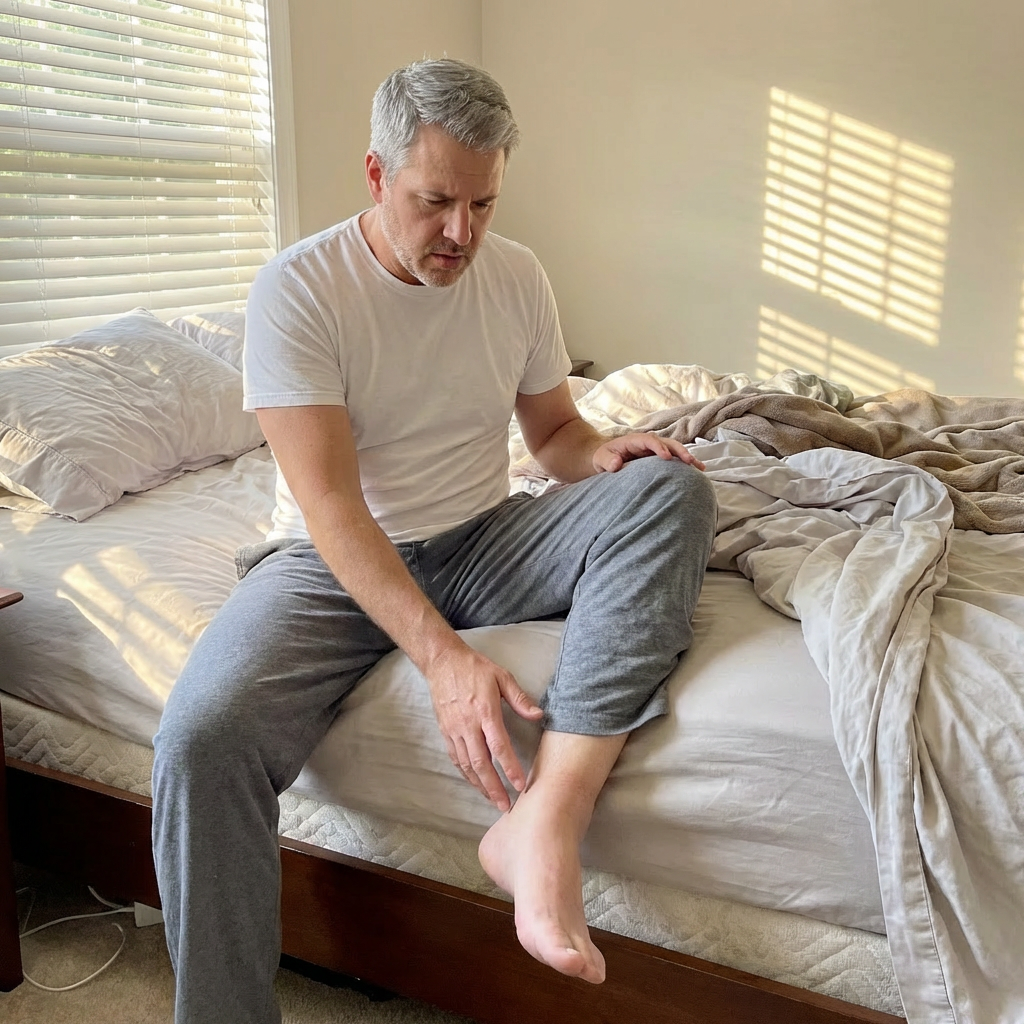
I woke up, swung my legs off the bed, and looked down. My ankles were puffy. Tight. Swollen in a way that didn't look like me. I pressed my thumb into the skin above my ankle bone and watched the indentation hold for ten full seconds. Like pressing into memory foam.
Maggie was getting ready in the bathroom. I tried to put on my loafers. They wouldn't go on. Not tight. Physically wouldn't fit over my ankles.
"Fletcher?" Maggie was standing in the doorway. She was looking at my feet. Her face changed the way it does when she's trying not to look scared. "How long has that been happening?"
The truth was weeks. Maybe longer. I'd noticed tightness in my shoes after dinner. Sock marks that took an hour to fade. A heaviness in my legs by evening. But I'd told myself it was just aging. Standing too long. The heat. I had an explanation for everything.
I was wrong about all of it.
The Appointment That Changed Everything
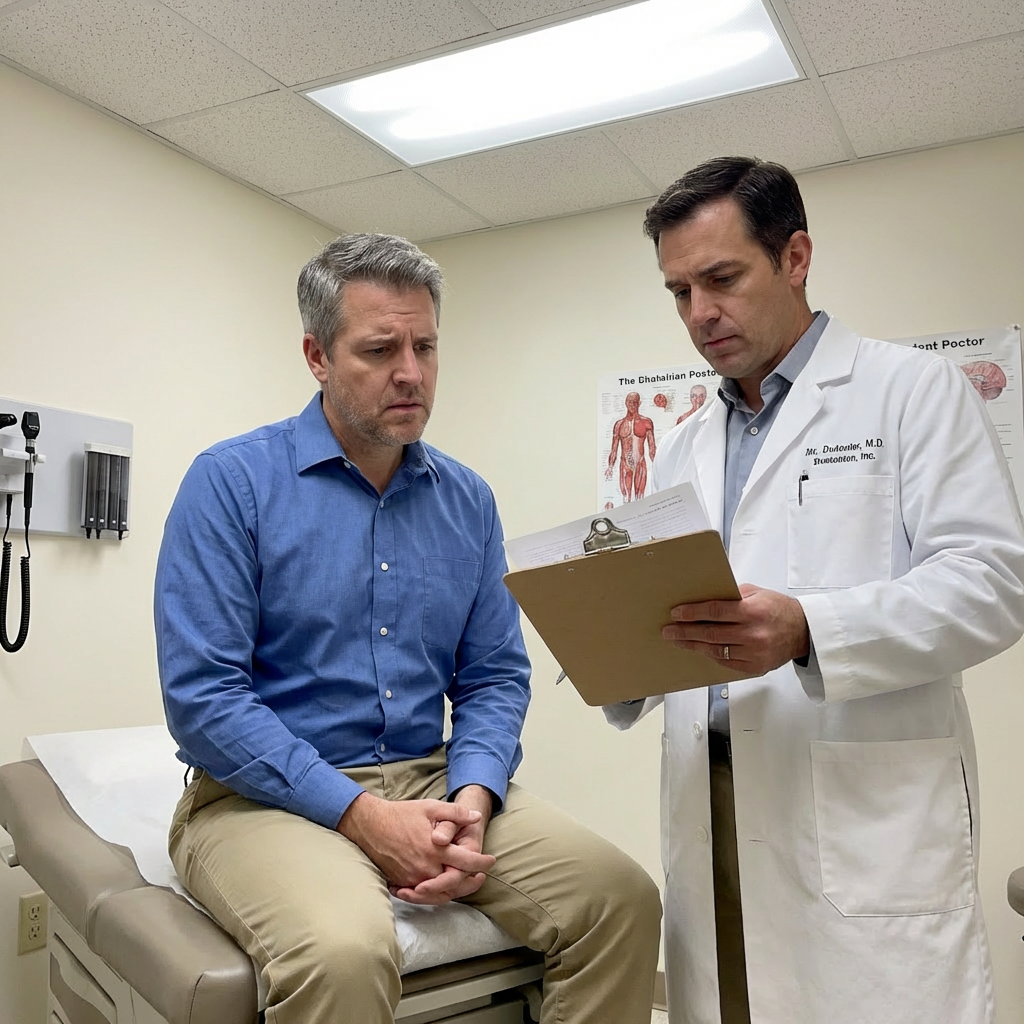
Dr. Callahan has been our family doctor for twelve years. Maggie made the appointment. I would have waited another month. She wouldn't let me.
He looked at my ankles. Pressed them himself. Felt the fluid. Didn't look surprised. He looked concerned.
He asked about my diet. Normal. Nothing extreme. Meat and potatoes, some salads, oatmeal in the morning. He asked about exercise. I walk three miles most mornings. He asked about alcohol. I told him the truth. A glass of wine with dinner most nights. Maybe a beer on Saturday. Nothing excessive. Nothing I'd ever thought twice about.
He ran bloodwork that morning. When the results came back two days later, he called me in. Not his nurse. Him.
My Bloodwork Results:
My Numbers
Normal Range
Dr. Callahan pulled the chart toward me so I could see it clearly. He pointed to each number. Slowly. The way you explain something to someone when the news is bad.
"Fletcher, your fasting glucose is 132. That's pre-diabetic. Your A1C is 6.3% and climbing. Your fasting insulin is 22, which means your body is producing almost three times the normal amount of insulin just to keep your blood sugar from going higher. And your HOMA-IR is 6.9. Normal is under 1. Your body has nearly seven times the insulin resistance it should."
I asked what that had to do with my ankles.
"Everything," he said. "When your cells stop responding to insulin, your body floods itself with more insulin to compensate. That excess insulin tells your kidneys to retain sodium. Sodium retains water. That's why your ankles are swelling. The puffiness, the sock marks, the shoes that don't fit. That's not aging, Fletcher. That's your body drowning in insulin it can't use."
Then he pulled up a chart. Four stages of metabolic deterioration. He pointed to each one like he was reading me a future I hadn't agreed to.
Stage 1: Insulin Resistance. Your cells stop responding to insulin normally. Blood sugar rises slightly. No symptoms. No diagnosis. You feel fine. Most people live in Stage 1 for years and blame everything on aging. Your body is compensating. It can't compensate forever.
Stage 2: Pre-Diabetes. A1C between 5.7% and 6.4%. Fasting glucose between 100 and 125. Your pancreas is working overtime to keep up. This is where symptoms appear. Swollen ankles. Afternoon crashes. Nighttime cravings. Numbness in your feet. Brain fog. Most people still don't connect these to blood sugar. They think they're just getting old.
Stage 3: Type 2 Diabetes. A1C crosses 6.5%. Your pancreas starts burning out. Metformin first. Then injectable medications. Then insulin injections. Nerve damage becomes permanent. Small cuts stop healing. Your vision changes. This stage is manageable but never fully reversible. You don't go back from Stage 3. You manage it for the rest of your life.
Stage 4: Complications. Peripheral neuropathy so severe you can't feel your feet. Diabetic retinopathy threatening your vision. Kidney damage requiring dialysis. Non-healing wounds. Amputation. My neighbor Carl went from "a little sugar" to a wheelchair in five years. His wife drives him to dialysis three times a week. He was a runner. He used to run marathons.
Dr. Callahan pointed to the space between Stage 2 and Stage 3.
I sat in that office chair for a long time after he finished. Maggie was in the waiting room. I didn't know what to tell her. Ninety days. That's all I had.
What Nobody Tells You About Metformin
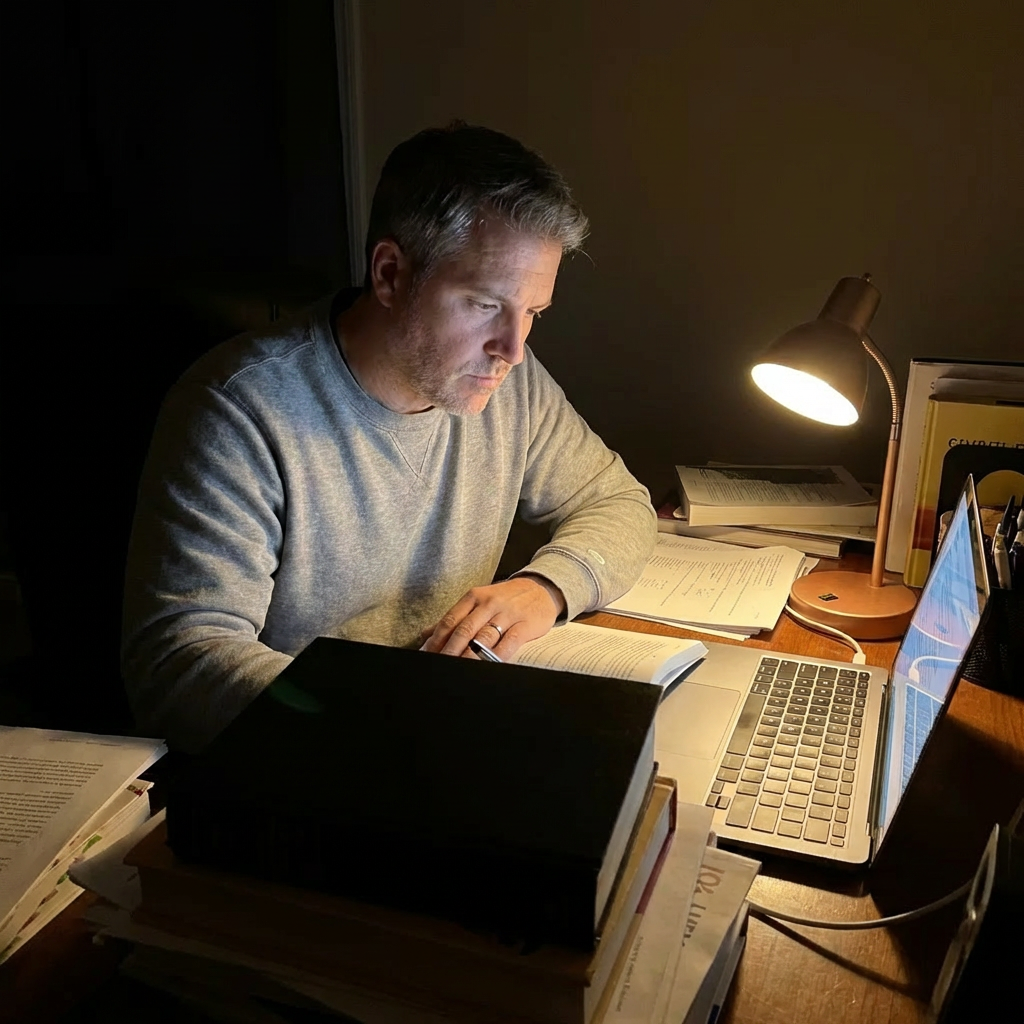
That night I did what I always do. I researched. Sat at my desk until 1 AM reading everything I could find about Metformin.
The drug works. I'm not going to pretend it doesn't. 150 million prescriptions per year in the US alone. It's the most prescribed diabetes medication in the world. And for many people, it's necessary.
But the side effects are real. And nobody talks about them until you're already on it.
- Gastrointestinal distress in 25-30% of users. Nausea, diarrhea, cramping, bloating. Some people can't leave the house for the first two weeks. A friend of mine, Gary, told me he spent the first month within sprinting distance of a bathroom at all times. "It was like food poisoning that never ended," he said.
- Vitamin B12 depletion. Metformin blocks B12 absorption over time. Long-term users develop fatigue, nerve damage, memory problems. The very symptoms you're trying to fix.
- Lactic acidosis risk. Rare, but serious. Your muscles ache. You feel exhausted in a way that sleep doesn't fix. Some cases require hospitalization.
- It doesn't fix the problem. Metformin manages blood sugar by reducing how much glucose your liver produces. It doesn't restore insulin sensitivity. It doesn't fix why your cells stopped responding in the first place. The moment you stop taking it, your numbers go right back up. That's why most people stay on it for life.
And then the cost.
Metformin itself is cheap. $4 to $30 a month for the generic. But that's not what you actually pay. You pay for the quarterly blood draws. The A1C monitoring. The specialist appointments when the side effects get bad. The B12 supplements to replace what the drug depletes. The endocrinologist referral when the primary care doc says you need a higher dose.
Average annual medical cost for a person with diagnosed diabetes in the US, according to the American Diabetes Association. That's 2.3x higher than someone without diabetes. Over 10 years, that's nearly $100,000 in additional medical costs.
I looked at those numbers and thought about Carl down the street. Dialysis three times a week. His wife quit her job to drive him. They sold their lake house to pay for it. He was healthier than me at 57.
Ninety days. I had to find another way.
Everything I Tried That Didn't Work
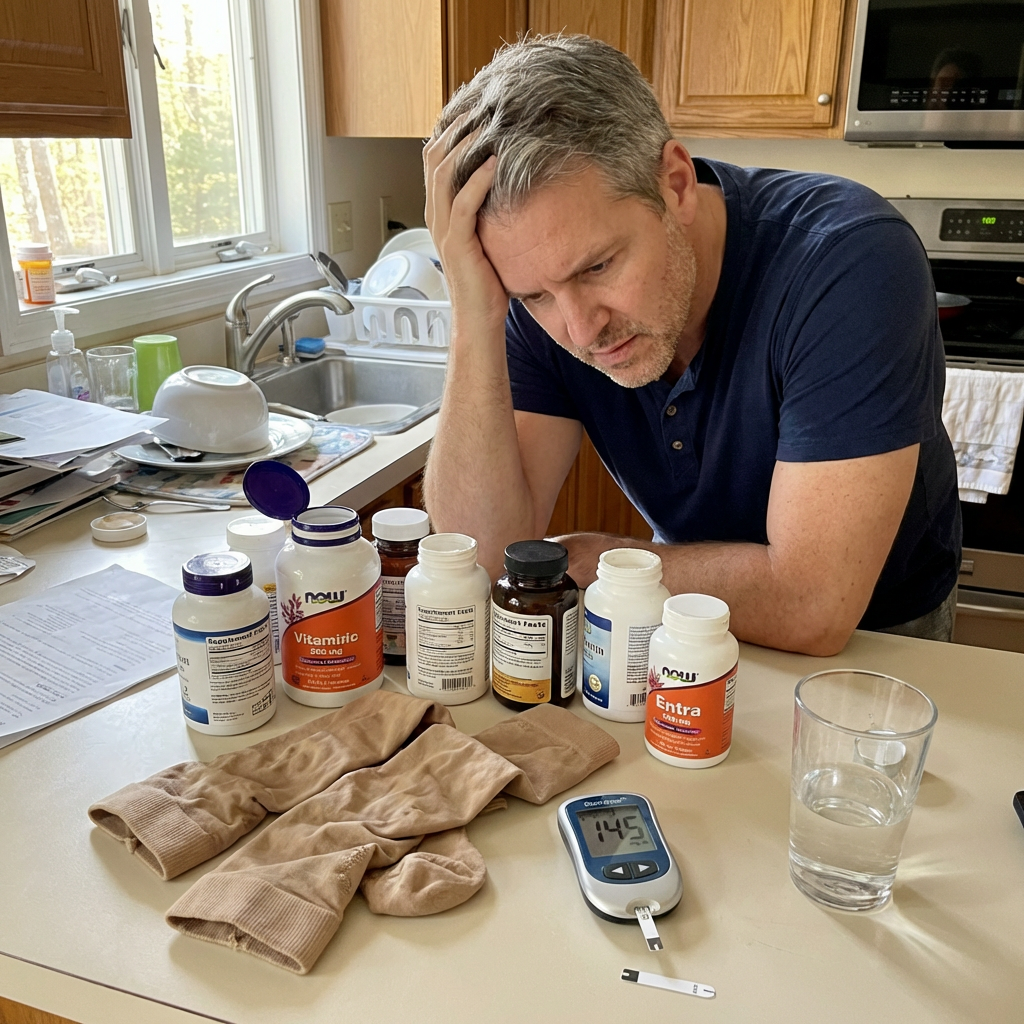
I went after it immediately. I'm a project manager by training. I made a spreadsheet. I tracked everything. Every supplement, every meal, every blood sugar reading.
Week 1-4: Berberine ($85/month)
Every podcast, every health blog, every "natural blood sugar support" article says the same thing: berberine. So I bought the highest-rated brand. Maximum dose, twice daily. After four weeks, my fasting glucose dropped from 132 to 124. Better. But not enough. My ankles still swelled. The 2 PM crashes still hit. And berberine tore up my stomach so badly I could barely eat lunch.
Week 5-8: Cinnamon + Chromium ($45/month)
Added cinnamon extract and chromium picolinate. The "insulin support" stack every supplement store recommends. Four more weeks. Fasting glucose: 121. Three points. In four weeks. The research says these work, but the doses in most capsules are a fraction of what the studies actually used. I was swallowing pills and getting almost nothing.
Week 8-10: Low-Carb Diet ($380 in specialty groceries)
Cut carbs drastically. No bread, no pasta, no oatmeal. My ankles went down slightly. But the cravings were unbearable. By week three I was standing at the pantry at 10 PM eating crackers straight from the box. My energy was gone. I was irritable. Maggie asked me if I was feeling okay. I wasn't. I was miserable, hungry, and my blood sugar was barely moving.
Week 10-12: "Glucose Support" Formula from a Podcast ($130)
Beautiful branding. Celebrity doctor endorsement. Proprietary blend (which means they don't tell you the actual doses). Four weeks. Fasting glucose: 119. My ankles still puffed up every afternoon. The sock marks still held for an hour. I pressed my thumb in and the dent lasted eight seconds.
$640 spent. Twelve weeks burned. Fasting glucose went from 132 to 119. Still pre-diabetic. Still swelling. Still crashing at 2 PM. Still 90 days closer to Metformin.
I was running out of time.
Why Nothing I Tried Worked Alone
I was sitting at my desk at midnight, three months into this, reading a 2023 meta-analysis from the University of Pittsburgh Medical Center when I finally understood why everything had failed.
Insulin resistance is not a single-pathway problem. It involves at least four simultaneous dysfunctions: cellular insulin sensitivity, chronic low-grade inflammation, impaired glucose metabolism, and disrupted gut-pancreas signaling. Addressing one pathway while ignoring the other three is like plugging one hole in a boat with four leaks. The boat still sinks. This is why single-ingredient approaches consistently fail in clinical settings.
This is why berberine alone dropped me three points. It addresses one pathway. Cinnamon alone did almost nothing. It's a supporting player, not a solution. The low-carb diet removed the thing my body couldn't process instead of fixing the processing itself. And the proprietary blend from the podcast had ingredients at doses too low to move the needle on any pathway.
I needed something that hit all four pathways at once. At clinical doses. Not a supplement stack I assembled myself from a health food store. A formula specifically designed for multi-pathway insulin resistance.
That's when I started wondering why this seemed so hard to find.
The diabetes and blood sugar management industry generates over $80 billion per year worldwide.
Metformin alone accounts for over 150 million prescriptions annually. The glucose monitoring industry is worth $15 billion. Insulin sales exceed $20 billion. Endocrinology visits, A1C tests, specialist referrals, complication management. The entire system is built around managing the disease, not reversing the underlying dysfunction.
A natural formula that costs less than $2 a day and addresses the root cause of insulin resistance is not a welcome development in an $80 billion industry.
Nobody is going to advertise it during the evening news. No pharmaceutical rep is going to mention it. No hospital system is going to build a revenue model around a $59 bottle that makes their most prescribed drug unnecessary. That's not how the economics work.
I'm not saying there's a conspiracy to keep people sick. I'm saying there's no financial incentive to make people well when the disease itself generates $80 billion a year.
That paragraph changed the way I thought about everything. I stopped looking at supplement store shelves and started reading clinical research directly. If a formula existed that actually worked, it wasn't going to be sitting next to the multivitamins at CVS.
The Research That Explained Everything
The more I read, the clearer the picture became. Insulin resistance requires a coordinated assault on multiple fronts. Not one ingredient. Not two. A complete system that addresses every pathway simultaneously.
Here's what the research showed:
Pathway 1: Cellular Insulin Sensitivity
Your cells have insulin receptors. When you eat, your pancreas releases insulin. Insulin binds to those receptors and tells the cell to absorb glucose from the blood. In insulin resistance, those receptors become desensitized. The key doesn't fit the lock anymore. So your pancreas produces more and more insulin trying to force the door open. That excess insulin causes weight gain, fluid retention, inflammation, and eventually burns out your pancreas entirely.
The fix: Re-sensitize the receptors. Make the key fit the lock again so your body doesn't need to overproduce insulin.
Pathway 2: Glucose Metabolism
Even when insulin gets glucose into your cells, the cells need to process it efficiently. In insulin resistance, glucose metabolism slows down. Sugar sits in your bloodstream longer than it should, causing the spikes and crashes that make you feel terrible every afternoon. Your body can't convert glucose to energy properly, so you feel exhausted even after eating.
The fix: Support the enzymatic processes that help your cells actually use the glucose they absorb.
Pathway 3: Appetite and Craving Signaling
When your blood sugar spikes and crashes all day, your brain gets confused signals. It thinks you're starving even when you just ate. That's why you stand at the pantry at 10 PM eating crackers. It's not willpower. It's a chemical signal from a brain that can't read your blood sugar properly. The cravings feel like hunger but they're not. They're insulin-driven.
The fix: Calm the appetite signaling system so your brain gets accurate information about when you actually need food.
Pathway 4: Pancreatic Support
Your pancreas is the organ that produces insulin. In insulin resistance, it's working seven times harder than normal (that's what my HOMA-IR of 6.9 meant). Over time, it burns out. When it burns out, you need injectable insulin. That's Stage 3 becoming Stage 4. Protecting the pancreas is not optional. It's urgent.
The fix: Reduce the workload on the pancreas by fixing the other three pathways, so it can recover instead of burning out.
Four pathways. All failing at the same time. All connected. Fix one and the other three compensate. Fix all four and the system rebalances itself.
That's when I found the formula that did exactly that.
How I Found It
My buddy Ray. We've been friends since our kids played Little League together. He'd been dealing with his own blood sugar issues for two years. Beer belly that wouldn't budge, crashing every afternoon, tingling in his feet at night.
His wife found a formula that his doctor actually recognized. Not a proprietary blend with hidden doses. Not a cinnamon capsule from the drugstore. A clinical-grade multi-pathway formula specifically designed for insulin resistance.
"It hit everything at once," Ray told me over the phone. "My fasting glucose went from 134 to 91 in three months. My doctor took me off the Metformin watch list. My ankles stopped swelling in two weeks."
Two weeks. I'd been fighting this for three months and he said two weeks.
"What's it called?"
"MetaboSync. It's made by a company called Cloud9."
I pulled up the label that night and spent the next two hours comparing every ingredient to the research I'd been reading for months.
The Formula: Six Ingredients, Four Pathways, One Capsule
This is what stopped me cold. Every ingredient mapped directly to the four pathways the research identified. Not one at a time. All at once. At clinical doses. Not hidden behind a proprietary blend.
✓ GlucoVantage Dihydroberberine (Pathway 1: Insulin Sensitivity)
This is not regular berberine. Regular berberine has terrible absorption and destroys your stomach. GlucoVantage is a next-generation form with 5x the absorption at lower doses. It re-sensitizes insulin receptors so your cells start responding to insulin again. Research from Virginia Commonwealth University showed significant improvements in insulin sensitivity within 8 weeks. And because the dose is lower, no stomach problems.
✓ Banaba Leaf Extract (Pathway 2: Glucose Uptake)
Banaba contains corosolic acid, which activates glucose transporters on the surface of your cells. Think of it like opening more doors for glucose to enter. Instead of sugar sitting in your bloodstream causing spikes, it gets pulled into your cells and converted to energy. Research from the University of Wisconsin showed 30% improvement in glucose uptake with daily banaba supplementation.
✓ Cinnamon Extract + Bitter Melon (Pathway 2: Glucose Metabolism)
Ceylon cinnamon supports healthy glucose response after meals by mimicking insulin activity at the receptor level. Bitter melon contains compounds that function like insulin in the body, helping cells utilize glucose more efficiently. Together, they address the glucose metabolism pathway that individual supplements miss. A 2022 meta-analysis from Mount Sinai documented consistent fasting glucose reductions when both are used in combination.
✓ Gymnema Sylvestre (Pathway 3: Appetite and Cravings)
Gymnema is called the "sugar destroyer" in Ayurvedic medicine. It blocks sugar receptors on your tongue (literally making sweet food taste less sweet) and reduces the intestinal absorption of glucose. But its real power is in appetite signaling. It calms the chemical cascade that makes you crave carbs at night. Research from Tufts University showed significant reductions in sugar cravings within three weeks. This is why people stop raiding the pantry at 10 PM.
✓ Chromium Picolinate (Pathway 4: Pancreatic Support)
Chromium is an essential trace mineral that your pancreas needs to produce and utilize insulin properly. Most Americans are deficient. In insulin resistance, chromium depletion accelerates because your pancreas is working overtime. Replenishing chromium at clinical doses reduces the workload on the pancreas and supports normal insulin function. A 2021 study from the University of Pittsburgh showed that chromium supplementation improved insulin function by up to 27% in pre-diabetic subjects.
Six ingredients. Four pathways. Everything the research said was necessary. Nothing missing. Nothing at subtherapeutic doses. Nothing hidden behind a proprietary blend.
I ordered a 6-month supply that night.
 Check MetaboSync Availability →
What Happened Over the Next 90 Days
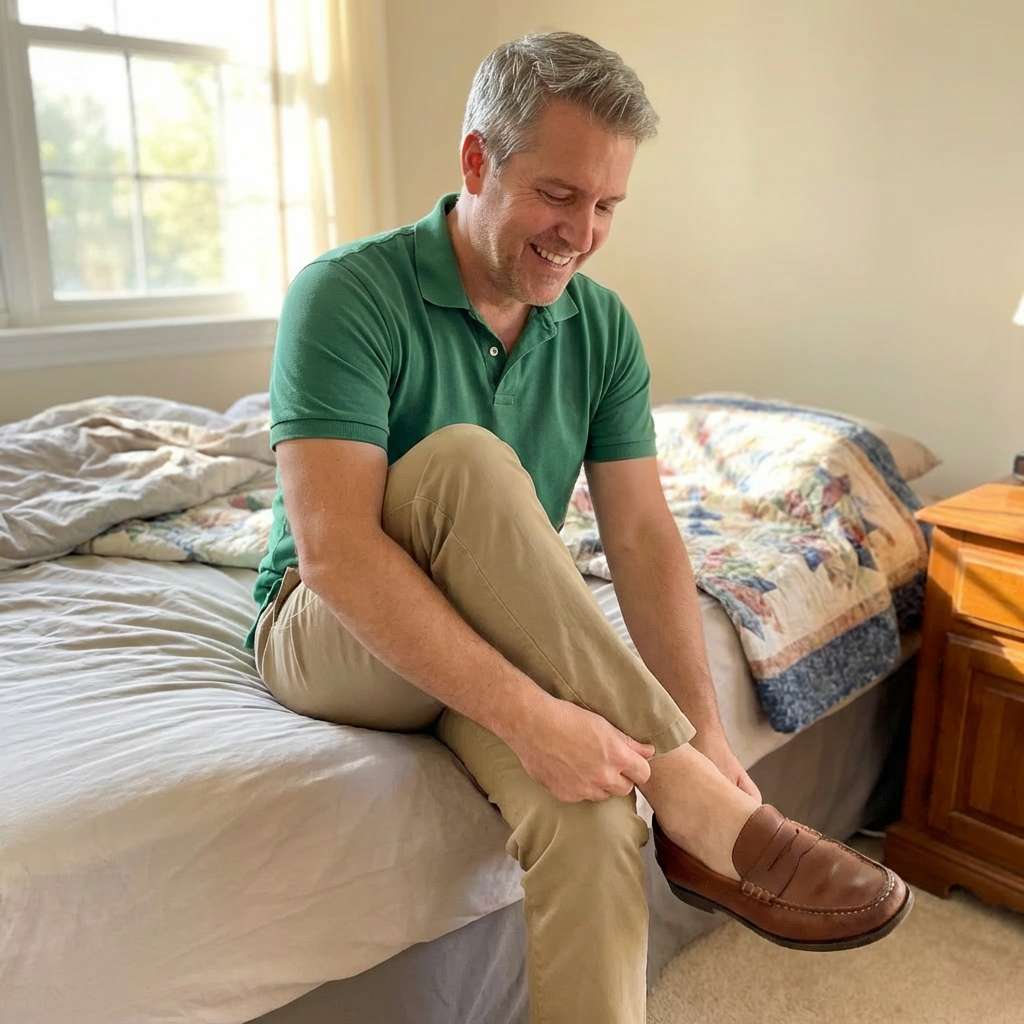
I started taking it the morning it arrived. Two capsules with breakfast. I didn't expect anything dramatic. After twelve weeks of failed supplements, I'd learned not to get my hopes up.
Days 1-7: Nothing Notable
No stomach issues (the GlucoVantage form of berberine is gentler). No side effects. But no dramatic changes either. I almost forgot I was taking it. Looking back, that was actually a good sign. The supplements that make you "feel something" immediately are usually stimulants. This was working underneath.
Day 10: The Shoes Fit
I put on my loafers and they slipped on. No struggle. No puffiness at the ankle. I looked down and my feet looked... normal. I pressed my thumb into my ankle bone. The dent faded in two seconds instead of ten. I didn't say anything to Maggie. I wanted to be sure.
Week 2: The Cravings Stopped
9:45 PM. I walked past the kitchen and kept walking. No pull toward the pantry. No negotiation with myself about whether one handful of crackers counted. The chemical signal that had been driving me to eat at night was just gone. I stood in the hallway for a second, confused. Then I went to bed. It was the first time in months I'd done that without eating something first.
Week 3: The 2 PM Crash Disappeared
I was working on a project in the garage and looked at the clock. 3:15 PM. The crash that hit me every single day at 2 PM hadn't come. Not a smaller crash. Not a delayed crash. No crash at all. My energy was steady from morning to evening for the first time in years. Maggie said I seemed like myself again. She didn't know how right she was.
Week 4: Maggie Said Something
"You're different." She said it at dinner. Not as a question. As an observation. "You're not dragging by evening anymore. You're not eating at night. You look... better." She glanced at my ankles under the table. "The swelling is gone, isn't it?" I nodded. She put her hand on mine and didn't say anything else.
Week 6: The Blood Sugar Monitor
I'd been checking my fasting glucose every morning with a home monitor. The first four weeks, it dropped slowly. 119... 114... 108... 103. By week six it read 94. Normal range. For the first time in God knows how long, my fasting glucose was normal. I sat on the bed and stared at the number. Then I checked it again to make sure the monitor wasn't broken.
Week 8: The Tingling Stopped
I'd started getting tingling in my feet at night. That pins-and-needles feeling. Dr. Callahan said it was early peripheral neuropathy from the blood sugar damage. By week eight, it was gone. I stepped out of bed in the morning and felt the hardwood floor. Cold. Solid. Every nerve ending working the way it should.
The Numbers My Doctor Didn't Expect
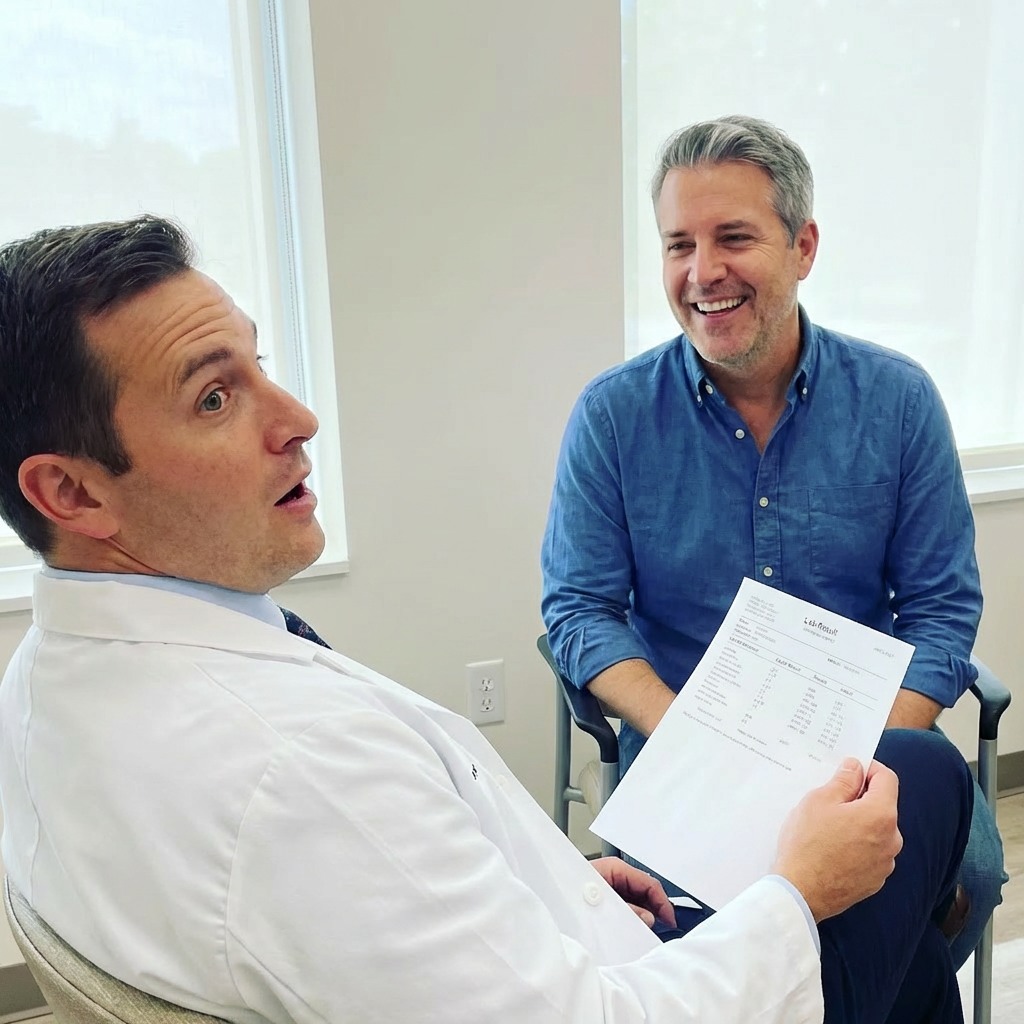
Ninety days after that first appointment, I went back to Dr. Callahan. I didn't tell him what I'd been taking. I wanted the numbers to speak for themselves.
My 90-Day Results:
Before (September)
After (December)
Dr. Callahan looked at the results. Then he looked at me. Then he looked at the results again.
I told him about MetaboSync. He pulled up the ingredient list on his computer, read through it for a minute, and nodded. "Multi-pathway. Clinical doses. GlucoVantage instead of standard berberine. This is well-designed." He wrote it down.
He wrote it down.
No Metformin. No quarterly monitoring schedule. No prescription. Just a note in my chart that says "patient reversed pre-diabetes through supplementation. Continue current protocol."
See the Formula My Doctor Wrote Down →I'm Not the Only One
After I started sharing my story, people kept reaching out with almost identical experiences. Pre-diabetic. Scared of Metformin. Tried everything. Found MetaboSync. Here are a few:
"My doctor said Metformin by January. My fasting glucose was 141. I found MetaboSync in September. By December my glucose was 88. A1C went from 6.4 to 5.2. My doctor asked what I was taking. When I showed him the label he said, 'This is what I wish more of my patients would try first.' I never started Metformin."
Greg D., 59, Austin, TX
"The swelling in my ankles and feet was so bad I couldn't wear heels to my daughter's wedding. My doctor said it was insulin resistance. My A1C was 6.1. I took MetaboSync for six weeks and the swelling was completely gone. Wore heels all night. Danced until midnight. My feet felt like they did ten years ago."
Patricia L., 54, Charlotte, NC
"I was on Metformin for two years. The side effects were miserable. Stomach cramps, diarrhea, no energy. My doctor agreed to let me try MetaboSync alongside a reduced dose. After three months, my numbers were better than they'd ever been on Metformin alone. We tapered off the Metformin completely. That was eight months ago. My numbers are still perfect."
Tom R., 61, Scottsdale, AZ
"I'm a nurse. I know what insulin resistance looks like. When my own fasting glucose hit 128, I was terrified. I started MetaboSync because the ingredient profile matched everything I'd learned in clinical training. Eight weeks later my glucose was 91, my cravings were gone, and I stopped waking up at 3 AM. This is what I recommend to every pre-diabetic patient who asks."
Deborah K., 52, Raleigh, NC
Why I Bought the 6-Month Supply
When I first saw the pricing, I did the math. Because that's what I do.
Metformin with quarterly monitoring, blood draws, and specialist visits averages $800-1,200 per year out of pocket with insurance. Without insurance, significantly more. And that's every year, for the rest of your life.
MetaboSync costs less than what most people spend on coffee.
Starter Supply
3-Month Supply (Most Popular)
6-Month Supply (Best Value)
I bought the 6-month supply for three reasons:
- The research is clear. Insulin sensitivity restoration takes 60-90 days to fully stabilize. One month isn't enough time to see complete results. Three months is the minimum. Six months locks in the improvements.
- The math. At $44/bottle, a 6-month supply costs less than a single endocrinologist visit with bloodwork. I spent $640 on supplements that didn't work. The 6-month supply of the one that did work costs $264.
- It keeps selling out. GlucoVantage (the enhanced berberine) is sourced from a single supplier. When it's out of stock, it's out for weeks. Having six months on hand means I never have to worry about interrupting what's working.
The Guarantee That Made Me Stop Hesitating
Cloud9 offers a full refund, even on empty bottles. You have 60 days to try MetaboSync. If your numbers don't improve, if the swelling doesn't go down, if you don't feel a difference, you get every penny back. No questions asked. No hoops. They even have a phone number you can call.
I'll be honest. That guarantee is what made me actually place the order. I'd already wasted $640 on supplements that didn't work. I wasn't eager to throw more money at another bottle of promises. But a 60-day guarantee meant the risk was theirs, not mine. If it didn't work, I got my money back and went on Metformin anyway. If it did work, I avoided a lifetime prescription.
It worked.
Six Months Later

I still take MetaboSync every morning. Two capsules with breakfast. It takes five seconds.
My last bloodwork (three weeks ago): fasting glucose 87. A1C 5.0. Insulin 7. HOMA-IR 0.9. All normal. All better than they were a decade ago.
My ankles haven't swelled in five months. I put on my shoes without thinking about it. Maggie doesn't glance at my feet anymore. The sock marks fade in seconds, not hours.
I still have wine with dinner sometimes. Not every night. A couple times a week. My body processes it now because my cells are responding to insulin again. The food I eat becomes energy instead of inflammation.
The 2 PM crashes are gone. The nighttime cravings are gone. The tingling in my feet is gone. The brain fog I didn't even realize I had is gone.
And I never took Metformin.
If You're Reading This and Your Numbers Are High
I know exactly where you are right now. You've gotten the bloodwork back. Or you've noticed the symptoms. The swelling, the crashes, the cravings, the fatigue. Maybe your doctor has mentioned Metformin. Maybe you're researching it at 1 AM the way I did.
I'm not a doctor. I'm a retired operations consultant from Charlotte who ate normally, drank moderately, walked every morning, and still ended up pre-diabetic with ankles that wouldn't fit in his shoes. I'm telling you what happened to me. What I found. What worked.
If any of this sounds familiar:
- Fasting glucose above 100
- A1C above 5.7%
- Swollen ankles or feet, especially in the morning or after meals
- Afternoon energy crashes that make you close your eyes at your desk
- Cravings at night that feel chemical, not emotional
- Numbness or tingling in your feet
- Weight gain around your midsection that exercise won't touch
- Your doctor has mentioned Metformin
Your body is telling you something. The swelling isn't water weight. The cravings aren't willpower. The crashes aren't aging. It's your cells refusing to respond to insulin. And it's fixable.
MetaboSync gave me my numbers back. It gave me my ankles back. It gave Maggie her peace of mind back. It costs less than $2 a day and it's backed by a 60-day guarantee that means you risk nothing.
The diabetes industry doesn't want you to know about it. That's not my problem. I'm just a guy from Charlotte who found something that worked and thinks you should know about it too.
See If MetaboSync Is Right For You →
My doctor gave me 90 days.
I found the answer in 10.
The swollen ankles were the warning.
MetaboSync was the fix.
DISCLAIMER: This article represents the personal experience of Fletcher Haines and is provided for informational purposes only. Individual results may vary. The statements made regarding Cloud9 MetaboSync have not been evaluated by the Food and Drug Administration. This product is not intended to diagnose, treat, cure, or prevent any disease. Always consult your physician or other qualified health provider before starting any new supplement regimen.
The testimonials and metabolic results presented represent individual experiences and outcomes that may not be typical.
© 2025 Fletcher Haines. All rights reserved.